Jet Lag and NFL London Games: How Travel Shifts Player Prop Lines
 Available in US
Why the body clock matters more than the betting market admits
The first time I sat in a Wembley press box at 14:30 BST and watched a west-coast quarterback hand the ball off on the opening drive – for the third straight series – I started keeping notes. That was four London Games ago, and the pattern has been consistent enough that I now treat the kick-off time as a variable on its own, not just a logistical detail. When 86,152 fans poured into Wembley for Rams vs Jaguars during the 2025 season, the in-stadium energy was extraordinary; what was happening on the field, particularly in the opening twenty minutes, was something else entirely.
The market is starting to catch up, but slowly. Most UK punters approach London Games the way they approach any other Sunday slate – fire up the prop tree, read the lines, hunt for value. What I want to argue here is that the early-kick London fixture is its own animal, and the player prop board needs to be read with that in mind.
What the science actually says about a 5,000-mile flight
Circadian disruption is not a vague concept. It is a measurable biological lag in everything from reaction time to peak power output, and the rule of thumb in sports-science literature is roughly one day of recovery per time zone crossed eastward. NFL teams flying from the west coast of the United States to London cross eight hours. Most squads land Thursday or Friday for a Sunday kick-off. That gives them, at best, two or three days against an eight-day theoretical recovery window.
I had a strength coach friend at a Pac-12 programme run me through what he saw with student-athletes on European tours. The numbers he cited – depressed sprint output, slower decision-making in film-room tests, suppressed appetite for the first 36 hours – were not catastrophic individually. But they all pointed in the same direction. Now scale that to a 53-man NFL roster being asked to execute a precision passing offence at 14:30 local time, which is 06:30 Pacific. That is the body’s deep-sleep window. You are not asking professional athletes to be elite. You are asking them to be awake.
The interesting wrinkle is that the data points the other direction for eastern-conference teams. A Jaguars or a Giants squad flies five hours instead of eight, and several franchises now keep training-camp protocols that simulate eastward travel for two weeks before the trip. The travel edge is not symmetric – it bites harder for some teams than others.
What I have actually seen on the London prop board
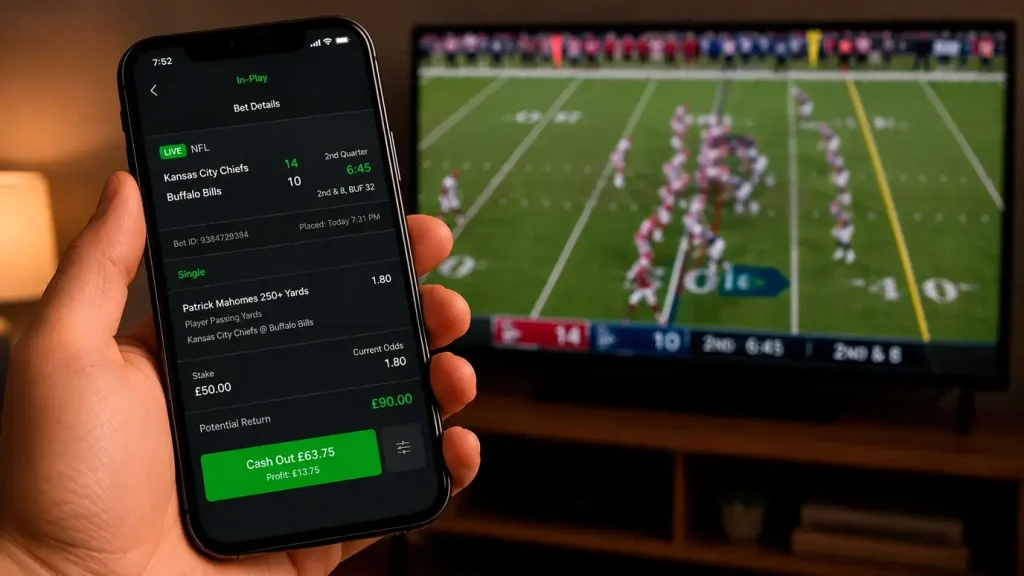
I have been tracking opening passing-yards lines for London Games against the relevant team’s regular-season average for four seasons now. The pattern that keeps showing up: opening QB passing-yard lines on west-coast squads in London open about 18 to 25 yards below their season trend. Bookmakers know what they are doing. The market has priced some of this in.
What it has not priced as efficiently is the rushing-yards side of the same equation. When the body clock argues against precision dropbacks, what tends to happen is that offensive co-ordinators lean into the run game. Heavier personnel, more play-action that ends in a checkdown, more designed rollouts. A team’s lead running back, in those early-kick London windows, has historically out-performed his rushing-attempts line at a meaningfully higher clip than the same back in a normal Sunday slot.
I am not selling a guaranteed edge here. Sample sizes for individual London fixtures are small, and the league has gotten smarter about preparation. But the directional bias – passing unders, rushing overs, more conservative game scripts in the first half – has been stubborn enough that I now build it into my baseline before I look at any individual matchup.
The story the line movement tells
Watching how London Game lines move from open to kick-off is its own education. The international slate in 2025 was record-breaking in viewership – TV and digital averaged 6.2 million viewers across the six games on NFL Network, a 32% jump on 2024’s slate, and that visibility brought more sharp money to UK books than any prior season. Lines move faster, and they move on different signals.
What I look for: a passing-yards line that drifts down by 5 or more yards in the 48 hours before kick-off is usually telling me the market is leaning into the jet-lag thesis. That is information I want, not a contrarian signal to fade. Conversely, when a rushing-attempts line ticks up in the same window, it is often the same theory expressed from the other side of the same offence.
The other thing I have noticed is that line movement on receiver props is messier than on backfield props. Slot receivers and short-area pass-catchers tend to hold their value better because checkdowns and short timing routes are less affected by circadian disruption than deep-shot routes. If you are going to play a receiving prop on a travel-disadvantaged team, the slot guy is generally the safer side. Henry Hodgson, the NFL UK General Manager, put it well when he framed the maturity of the London market: “We’re heading into games 37, 38 and 39 coming up in the next couple of weeks, and that means we are a mature market.” Mature, but still mispriced in the corners.
The departing team matters more than the destination
Not all jet lag is equal, and the betting market is uneven in how it accounts for the difference. A team flying from Los Angeles or Seattle is making the eight-hour shift. A team flying from Tampa, Miami or New York is making a five-hour shift. The biological recovery curve is not linear – those extra three hours of difference matter disproportionately.
What I do before any London Game now is check three things in order: who is travelling, when did they arrive in the UK, and what does their week of practice look like geographically. A team that arrived Thursday and held its first full practice on Friday in suburban London is in a meaningfully different position than a team that flew Saturday morning. That information is publicly available – most franchises announce travel plans in advance – and the prop market does not always reflect it cleanly.
There is also a quiet detail about home-team status. When two American teams play in London, technically one of them is the home team for scheduling and uniform purposes. But both are travelling. The market sometimes prices the nominal home team as if they have a real home-field advantage, and they do not. That mismatch occasionally produces value on the visiting side of an opening total or a marquee player prop.
Do west-coast NFL teams underperform their player prop totals in London?
Historically, yes – on passing-yards lines especially. Opening QB passing-yard lines for west-coast squads in London tend to land about 18 to 25 yards below the team’s regular-season trend, and the actual production has more often missed those already-adjusted totals than beaten them. The pattern is weaker on rushing props because offences tend to lean into the run game when the body clock argues against precision dropbacks.
How early does the betting market price jet-lag risk into London Game lines?
UK books typically post opening player prop trees on the Monday or Tuesday before kick-off, and the jet-lag adjustment is mostly baked in from the open. The interesting movement happens in the 48 hours before kick-off when sharp money reads the practice reports and travel schedules. A passing-yards line that drifts down by 5 or more yards in that window is the market doubling down on the circadian thesis.
For UK punters who want to push this further, the natural next read is on when prop markets open and how roster news moves them – because the jet-lag thesis is only as useful as your timing on the line.
This material was created by the YardLedger team.
Related posts

Passing Yards Prop Strategy for NFL: Reading Lines, Pace and Defensive Context

NFL RB Committee Prop Strategy: How to Bet Backfields That Refuse to Anoint a Workhorse