UK NFL Player Bets: Top Props and Odds
 Available in US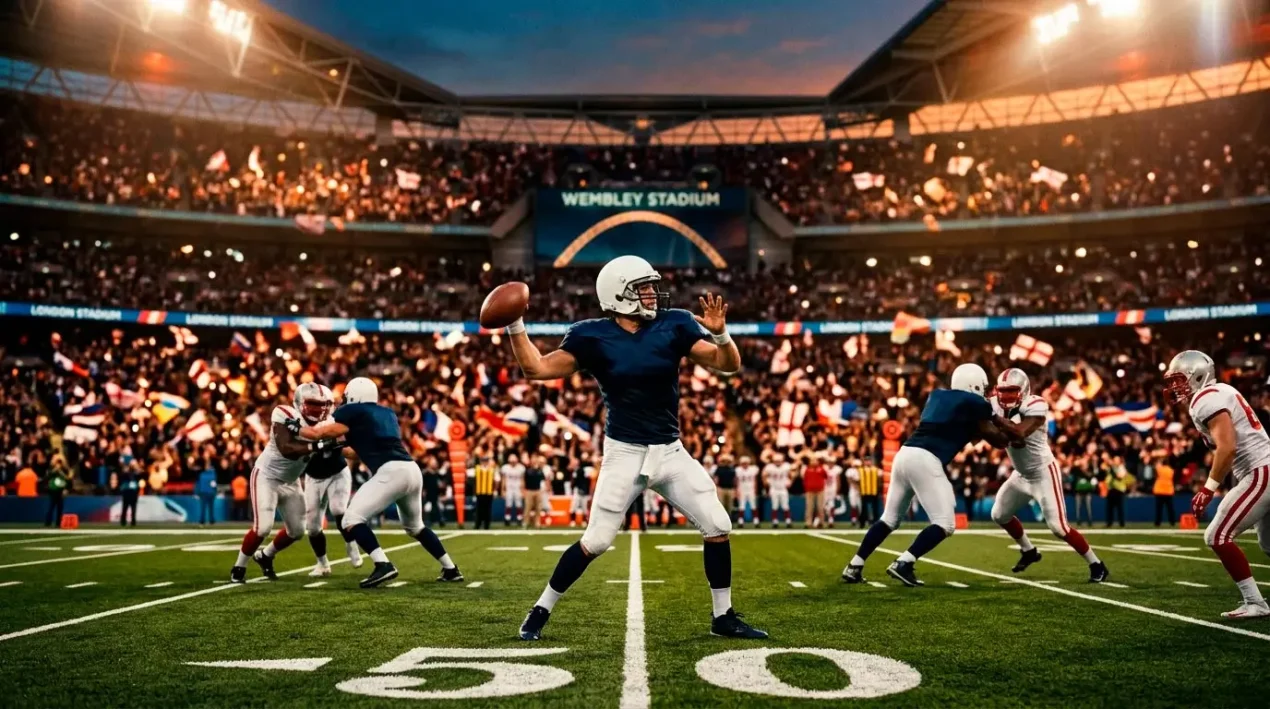
A data-led walkthrough of every NFL player prop on the UK market — what each bet means, how it settles, and which numbers separate sharp punters from the rest.
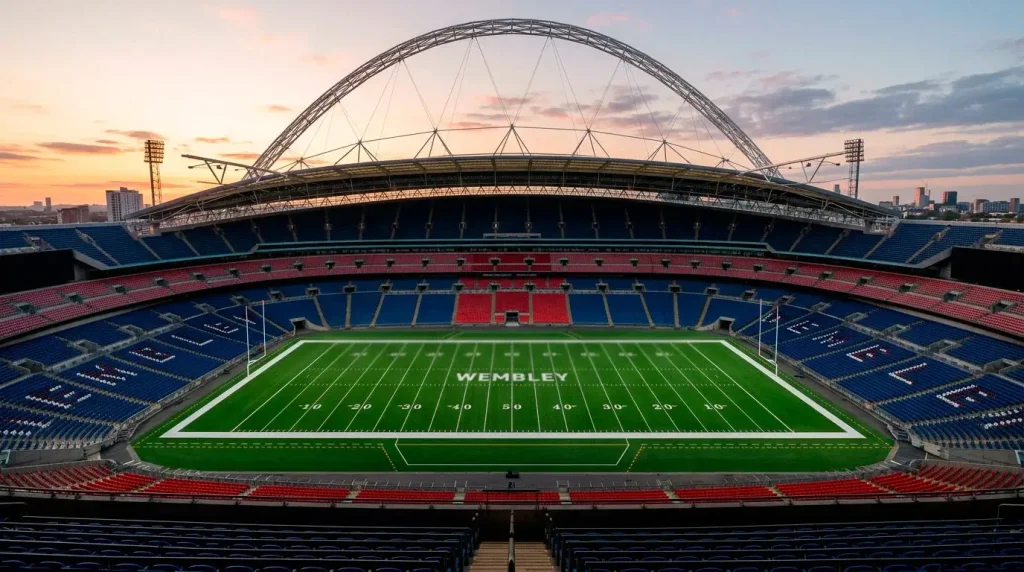
I placed my first NFL player bet during a London game at Wembley in 2018, on Saquon Barkley to score anytime against the Vikings. He didn't. I walked out of the stadium £20 down and convinced I'd been swindled — then spent the next seven years working out why I hadn't been. That confusion, multiplied across hundreds of thousands of British punters, is the entire reason this guide exists.
An NFL player bet — or player prop, to use the American shorthand that's now standard at UK bookmakers — is a wager on what a specific player will do during a match, rather than on which side wins. Passing yards, rushing yards, receiving yards, touchdowns scored, tackles made, sacks recorded. The match result doesn't matter; only the individual stat line does. That's a fundamentally different bet to a match winner or a handicap, and it's the bet that's eaten the British NFL market alive over the last two seasons.
The numbers are striking. The big UK and Irish bookmakers reported that the number of customers staking on NFL grew 65 per cent year on year through the 2024/25 season, with total stakes climbing 46 per cent. Roughly 1.2 million Britons type something NFL-related into a search engine every month — about three per cent of the entire global NFL search volume — and a sizeable slice of them want to know how to bet on it. By the end of this guide you'll know what props exist, how they settle, which UK rules govern the bets, and where most British punters lose money without realising why.
Essential NFL Player Props Advice for UK Sportsbook Apps
- An NFL player bet settles on one player's stat line — yards, touchdowns, tackles — regardless of which team wins the match.
- The anytime touchdown scorer is the UK's most-staked single player prop, and the most frequently misunderstood: a passing touchdown does not count for the quarterback's own anytime TD bet.
- UK customer numbers on NFL betting grew 65 per cent year on year through the 2024/25 season; total stakes rose 46 per cent, and London-game stakes specifically climbed 51 per cent.
- Remote betting duty rises from 15 per cent to 25 per cent in April 2027, which will tighten the prices customers see across most NFL markets.
- Bet only with UKGC-licensed bookmakers, set a deposit limit before you stake anything, and shop lines across at least two accounts before placing a prop bet of any size.
How the UK Quietly Became One of the NFL's Most Profitable Betting Markets
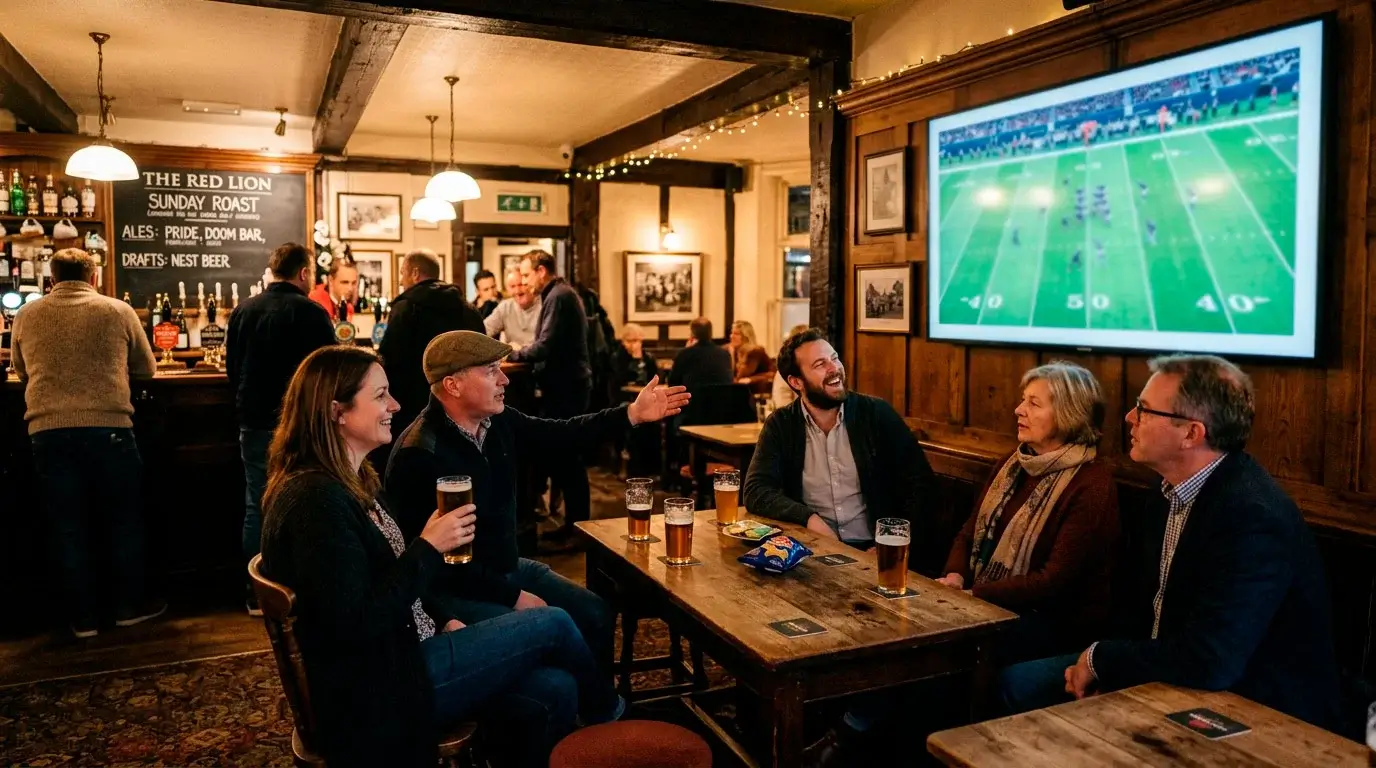
Walk into any pub in London on a Sunday evening in October and you'll see a screen showing red zone action. That wasn't true ten years ago. The fanbase has grown into something the bookmakers can no longer treat as a niche — the NFL now claims more than 13 million fans in Great Britain, with roughly four million classed as avid followers who watch most weeks. That puts the UK alongside Germany as the NFL's largest non-American audience by some distance.
The interesting thing isn't the headline number. It's how concentrated and engaged the audience has become. Kansas City Chiefs sit on top of the team popularity rankings, pulling in around 9.5 per cent of all UK NFL team searches — somewhere near 50,000 queries a month for one franchise. Croydon, of all places, runs hotter than anywhere else in the country at 242 NFL searches per 100,000 residents, almost three times the national average. When I tell people there's a pocket of South London more interested in the Chiefs than Crystal Palace are in their own team, they don't believe me until I show them the data.
13 million
NFL fans in Great Britain, four million of them classed as avid
+65 per cent
year-on-year growth in UK customers betting on NFL through the 2024/25 season
+51 per cent
rise in total stakes on the London Games versus 2023
That fan growth has translated directly into betting volume. Entain — the group behind Ladbrokes and Coral, and one of the few operators willing to publish granular NFL numbers — was the source of the figures I cited in the intro: customer growth of 65 per cent and stakes up 46 per cent on the 2024/25 season. What I didn't mention there is the London-only breakdown. Stakes at Entain books on the London Games alone climbed 51 per cent versus 2023. That's not slow incremental growth; that's an accelerating market. Andrew Rhodes, the Chief Executive of the UK Gambling Commission, summed up the broader picture at a regulatory briefing earlier this year, noting that conversations with operators showed a widening of the sports offering — with sports beyond traditional horseracing and football, including NFL, growing in customer usage.
What I take from those numbers as a punter: liquidity is genuinely improving. Two seasons ago you couldn't get a reception line on most starting wide receivers at half the UK books. Now you can — and you can shop them across five or six operators before kick-off. That's the practical consequence of a market growing this fast. It also explains why the bookmakers are pouring marketing budget into NFL: it's the fastest-growing product they have outside football itself.
What a Player Prop Actually Is — and Why It Isn't the Same Bet as a Match Winner
A friend once asked me, during a Bills game on Sky, whether his bet on Josh Allen "to score more than 250 passing yards" was a bet on the Bills to win. He'd put a tenner on it. The Bills lost by 14. The Allen line went over by 60. He won.
That's player props in one sentence. The bet is on the individual stat line — yards thrown, yards rushed, yards caught, touchdowns scored, tackles made, sacks recorded — and it settles entirely independently of who wins the match. A player prop is what bookmakers call a proposition wager, or sometimes simply a "specials" market. The principle is the same as an over/under on goals in football: the line is set, you back the over or the under, and the result is decided by what one specific player produces.
Player prop (proposition wager) — a bet on an individual player's statistical output in a single match. Settles on the stat line only. The match result is irrelevant. Most commonly priced as an over/under on a numerical line, or as a yes/no on whether a player will score a touchdown.
This sets player props apart from the two other big NFL bet categories. An outright bet — a match winner, or what the Americans call a moneyline — pays out only if the team you back wins. A handicap bet — what the Americans call a point spread — adjusts the scoreline by a margin and pays out depending on whether one side covers that margin. Both of those are decided by team performance. A player prop is decided by one person on the field, regardless of what their team does around them.
The lines themselves have settled into recognisable ranges across the UK books. A starting quarterback's passing yards line typically sits between 250 and 300 yards in a regular-season game. Passing touchdowns hover around 1.5 to 2.5. Interceptions are usually priced at 0.5 or 1.5. A starting wide receiver's receptions line lands somewhere between 3.5 and 7.5, depending on his role and his team's volume. Receiving touchdowns are almost always 0.5 — meaning the bet is essentially "will he score one or not". Once you know those ranges, you can spot mispriced lines a lot faster, because most of the value sits at the edges of those bands rather than at the middle.
The bet's clean simplicity is exactly what makes it dangerous. You don't need to forecast a match outcome; you just need to read one player. That makes player props feel easier than they are, which is part of why so much money flows into them — and part of why the bookmaker's margin on a player prop tree is meaningfully higher than on a match winner.
The Full Tree of NFL Player Props You'll Find at a UK Sportsbook
A UK bookmaker's NFL prop tree for a single game now runs to several hundred individual markets in a regular week. That sounds intimidating; in practice it sorts into six familiar buckets. Once you know the buckets, finding the bet you actually want takes seconds rather than minutes of scrolling. Below is the full taxonomy, with the kind of line ranges you should expect to see at a UK book.
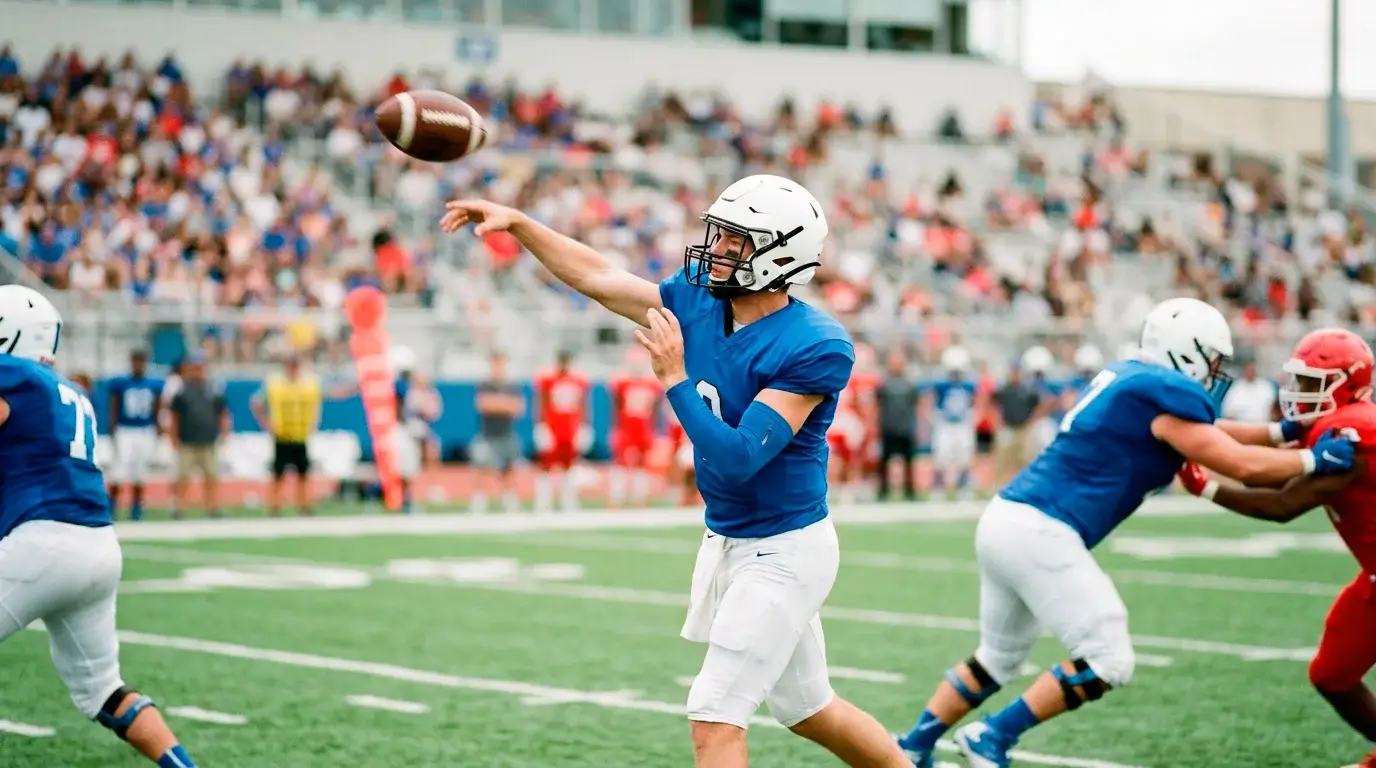
Passing props
The quarterback markets — the loudest, deepest part of the tree. Passing yards is the headline number: an over/under on how many net yards the QB will throw for in the game. Lines sit between roughly 250 and 300 yards for a starting NFL quarterback, lower for backup arms or known game-managers, higher for a Mahomes or a Burrow on a fast-pace week. Passing touchdowns are typically priced at 1.5 or 2.5. Interceptions are usually 0.5 or 1.5 and are one of the highest-variance markets on the board. You'll also see passing completions, longest completion, and the more exotic "first interception thrown by" novelty.
Rushing props
The running back markets, plus mobile quarterbacks. Rushing yards is the core line, with a typical workhorse RB landing between 55 and 90 yards as the over/under. Rushing attempts (carries) appear at most UK books — useful when you have a view on game script. The longest rush market is offered, though it's mostly noise. A separate "rushing plus receiving yards" combined line exists for dual-threat backs and is often where the genuine value lives, because it's harder for the bookmaker to price than the components in isolation.
Receiving props
The wide receiver and tight end markets. Receiving yards is the main over/under, with starting wide receivers usually carrying lines from about 40 yards (a third receiver or rotational option) up to 75 or 80 yards (a clear WR1). Receptions are priced between 3.5 and 7.5 for starting wideouts. Receiving touchdowns are almost always 0.5 — a yes/no on whether the player scores through the air. Tight ends typically carry receiving-yards lines under 50, because the position's volume distribution is narrower than the wideout position's.
Defensive props
Sacks, tackles, and interceptions thrown — only this time the wager is on the defender making them. UK availability is thinner here than at US books, and the lines move violently on injury news because so few players are involved. Sacks lines for edge rushers sit around 0.5, occasionally 1.5 for an elite season-best matchup. Tackles markets are most common for off-ball linebackers and safeties. Interception-by-a-defender markets are usually offered only on flagship games and Super Bowl Sunday.
Kicking props
Field goals made, longest field goal, total kicker points. Lines sit roughly between 1.5 and 2.5 made FGs for a starting kicker in a regular game. The longest FG market is a function of the game's geography — outdoor cold-weather venues compress the upper tail, indoor venues stretch it. Most UK punters ignore these; the lines tend to be sharply priced precisely because volume is low.
Touchdown scorer and novelty
The most popular single bucket in the entire tree, with two flagship markets. The anytime touchdown scorer asks whether a named player will score a touchdown at any point in the game; the first touchdown scorer asks whether they'll score the very first one. Novelty markets cover everything else — first interception thrown, longest punt return, first quarter score type, race to ten points, and during the Super Bowl the full carnival of coin-toss outcomes, national anthem timings, and other curiosities. The anytime touchdown scorer is the single most heavily staked NFL player prop in the UK, by a wide margin, and the one we'll spend the most time on in the next section.
Anytime Touchdown Scorer vs First Touchdown Scorer — the Settlement Difference
If I had a pound for every customer-service ticket I've heard about in this exact spot, I'd cover the cost of writing this guide. The confusion isn't that punters don't read terms. It's that the two markets share a name, share players, and share odds layouts — but settle differently in two important ways.
An anytime touchdown scorer bet wins if your player scores a touchdown at any point in the game, regardless of when. One score is enough; three scores is the same payout. A first touchdown scorer bet wins only if your player scores the very first touchdown of the game. If he scores second, third, or last, the bet loses. That timing distinction is everything, and it's the reason first TD markets are priced at much longer odds than anytime — typically four to six times longer for the same player.
| Bet type | Wins if | Typical odds (starting RB) | UK-staking volume |
|---|---|---|---|
| Anytime touchdown scorer | Player scores at any point in the game | Around even money to 2/1 | Highest of any single player prop |
| First touchdown scorer | Player scores the first touchdown of the game | Around 6/1 to 12/1 | Roughly a tenth of anytime volume |
| Last touchdown scorer | Player scores the final touchdown of the game | Around 6/1 to 12/1 | Low; popular in Super Bowl only |
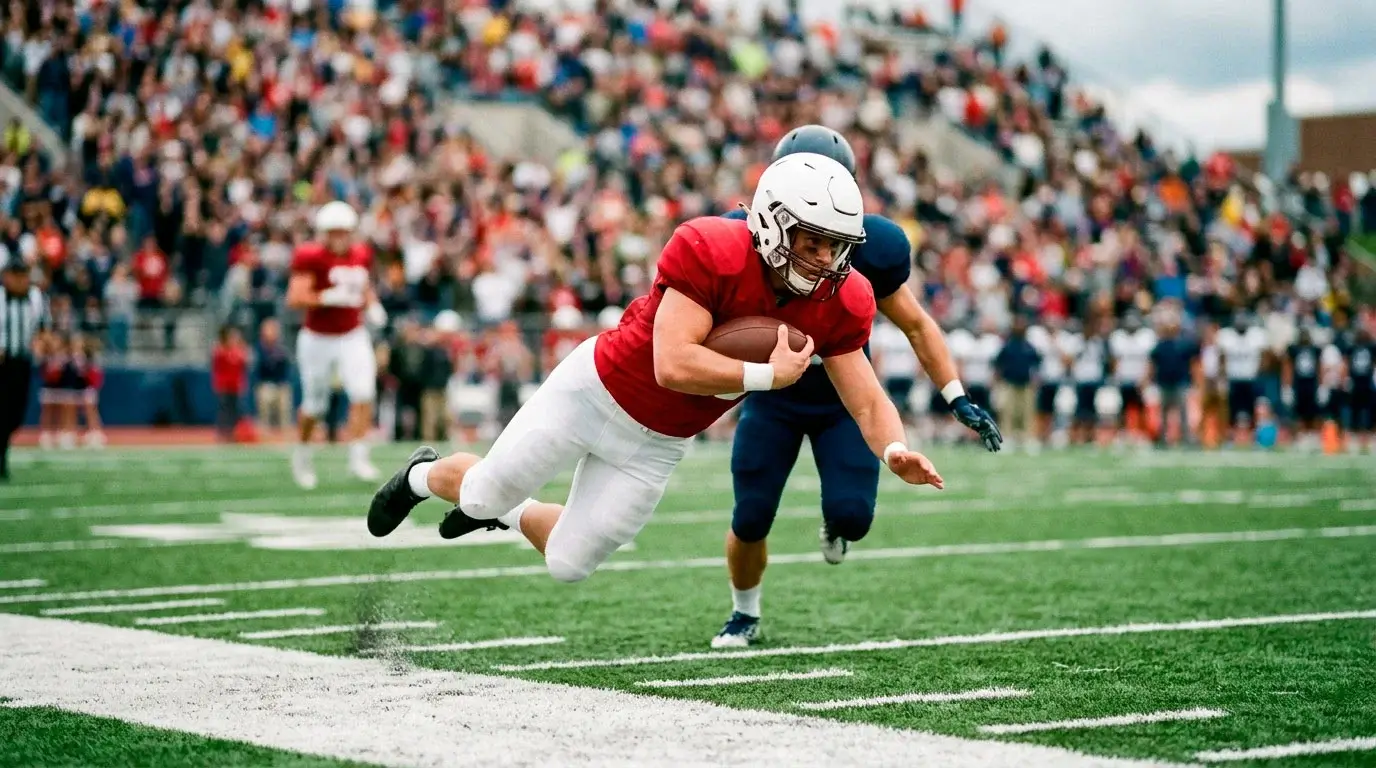
The second source of confusion, and the one that costs people real money, is the quarterback question. If Patrick Mahomes throws three touchdown passes but doesn't carry the ball into the end zone himself, his anytime touchdown scorer bet loses. Throwing a touchdown does not count as scoring one — only rushing and receiving touchdowns count towards an anytime TD bet, plus the rare defensive recovery in the end zone if a QB happens to fall on a fumble in the right spot, which essentially never happens. For a quarterback's anytime TD to settle as a winner, he must run the ball into the end zone himself. That's why Jalen Hurts and Lamar Jackson carry far shorter anytime TD prices than equally talented pocket passers — they design quarterback sneaks and red-zone runs into the playbook.
The other QB-related trap is the two-point conversion. A successful two-point conversion is not a touchdown. It does not count for any anytime TD bet, regardless of which player carries or catches the ball on the conversion attempt. Punters routinely watch their bet lose by a single un-credited score because they didn't realise this. The deeper mechanics — late-scratch void rules, dead-heat handling on first TD scorer when a play is reviewed and reassigned, position-by-position hit-rate baselines — sit in the standalone guide to how the anytime touchdown scorer bet settles in the UK. Read it before you stake another tenner on a goal-line back.
Same Game Parlay and Bet Builder — the Most Marketed, Least Understood Format
Open any UK sportsbook app on a Sunday and the homepage will be a wall of pre-built parlays. Eight-leg same-game-parlays at 35/1, ten-leggers paying 80s, screenshots of mythical winners. There's a reason the bookmakers push this product so hard, and it isn't because punters keep winning on it.
A Same Game Parlay — usually shortened to SGP, and called Bet Builder by most UK operators — is a single bet that combines multiple legs from the same NFL game. Two passing-yards overs, a receiving-touchdown yes, and a team total over might all sit inside one ticket. The legs all have to win for the ticket to pay. Because the bookmaker calculates correlation between legs internally before pricing the combined odds, an SGP is mathematically different from a traditional accumulator — and the difference does not favour the punter.
Seth Walder of ESPN put it more bluntly than I'd be willing to. "Betting parlays is a great way to get a viral screenshot on social media and an even greater way to lose money," he wrote in last August's NFL betting guide. "With every leg that you add to your parlay, you're paying the sportsbook a greater and greater tax for placing the bet. Same-game parlays have even worse mathematical edges than traditional parlays." That's a writer ranked among the sharper public commentators on sports analytics, telling you the maths is against you. Worth listening to.
The "tax" Walder describes is the difference between the true combined probability of all your legs hitting and the price the bookmaker actually quotes. With a regular four-leg accumulator on four independent matches, the bookmaker takes a small slice on each leg and they compound into a slightly worse-than-fair payout. With an SGP, the bookmaker is also adjusting for correlation — and the way that adjustment is implemented in commercial sportsbook software typically widens the margin further. You're getting a more bespoke product and paying more for it.
That doesn't mean every SGP is a losing proposition. There are real situations where two legs reinforce each other — a quarterback's passing-yards over and his WR1's receiving-yards over, for instance, are positively correlated, and a smart SGP can capture that correlation as edge. There are also genuine pitfalls, particularly when legs cannibalise each other, like backing a running back to score a rushing TD alongside the same team's quarterback to throw three touchdown passes. Every red-zone trip can only end in one of those outcomes.
The correlation maths, the leg-pairing matrices, and the bankroll discipline that SGP bets actually require sit in a longer treatment. If you're going to make SGPs a regular part of your NFL betting, please go and read the full NFL Same Game Parlay strategy guide before your next ticket. The headline rule is short: fewer legs, tighter correlation, smaller stake than you think.
YardLedger tool · Bet Builder audit
The Builder Tax
Enter the price of each leg and the combined Bet Builder price your bookmaker is quoting. The tool works out what the ticket returns if the legs are independent, how much correlation the quoted price is demanding, and what the builder costs you against backing the same legs as singles.
Your ticket
Legs in the builder
Fractions, decimals and “evens” all work. A single prop price carries the bookmaker’s margin inside it and cannot be stripped out from one side of the market alone, so the slider sets the assumption: 4 to 5 per cent is typical for NFL player props at UK books, 6 to 8 per cent for thin defensive and kicking lines.
The verdict
Builder tax per £100 staked
£10.57
- Ticket returns, legs independent£85.13
- Same legs backed as singles£95.69
- Correlation the price demands+17.5%
- Fair price if legs are independent9.99
- Naive accumulator price8.75
- Price you were quoted8.50
Your legs need to land together 17.5% more often than independence implies just to break even. Defensible when the legs genuinely share the same drives — steep when they don’t.
Leg by leg
- Leg 11.91 · implied 52.4% · de-vigged 50.1%
- Leg 21.83 · implied 54.5% · de-vigged 52.2%
- Leg 32.50 · implied 40.0% · de-vigged 38.3%
Independence is an assumption, not a claim: real Bet Builder legs are correlated, which is exactly why the quoted price sits below the naive accumulator. This tool measures how much correlation the bookmaker is charging you for, not whether that correlation exists. Prices move constantly — check the live board before staking. 18+ only. Bet only what you can afford to lose.
Translating American Betting Vocabulary Into British English
Half the betting content on the open web is written for an American audience, by American writers, using American odds formats and American terminology. A UK punter reading a Bleacher Report parlay tipsheet runs into "moneyline plus 175 on the Niners" and immediately loses the thread. The vocabulary problem is bigger than people admit, and it's solvable in five minutes with a table.
The first thing to understand is that the bets are largely the same. A moneyline bet at an American sportsbook is mechanically identical to a match-winner bet at a UK sportsbook. The names differ, the odds formats differ, but the wager is the same. Once you've mapped the vocabulary, you can read any American gambling article without getting lost — which matters, because most of the deepest statistical writing about NFL betting is American.
| American term | UK term | What it actually is |
|---|---|---|
| Moneyline | Match winner | Straight bet on who wins the match outright |
| Point spread | Handicap | A points adjustment applied to the score before settling |
| Total / over-under | Total points / over-under | Combined points scored by both teams, over or under a line |
| Parlay | Accumulator (acca) | Multiple bets combined into one ticket; all legs must win |
| Teaser | No direct UK equivalent | Parlay variant adjusting each spread by a fixed margin |
| Prop / proposition | Special / prop | Bet on a side market or a player's stat line |
| Same game parlay (SGP) | Bet Builder | Multi-leg combined bet inside one game |
| Juice / vig | Margin / overround | The bookmaker's built-in profit on a market |
| Sportsbook | Bookmaker / bookie | The operator taking the bet |
| Anytime TD | Anytime touchdown scorer | Player scores a touchdown at any point in the game |
The odds-format gap matters even more than the vocabulary gap. American books quote prices as positive or negative numbers — minus 110, plus 175, minus 200. UK books quote fractions — 10/11, 7/4, 1/2 — or decimals if you flip the setting. There's no philosophical difference between them; they're just three notations for the same probability. Most UK sportsbooks let you switch the display in your account settings, and I'd suggest doing that early — once you've got decimals visible, line-shopping across multiple books becomes much easier because you can compare to two decimal places rather than reading fractions of unequal denominators.
One more pitfall: "spread" in the UK is most commonly used to refer to spread-betting, a separate product with its own regulation — different to the American point-spread. When you're following an American tipster, sanity-check that you're staking on the bet you think you're staking on.
What Separates a Good NFL Sportsbook From a Mediocre One in the UK
"Which is the best bookie for NFL?" is the single most common question I get asked, and it's the question I'm worst at answering, because the honest reply is: it depends on what you bet and how often. A line-shopper with five accounts approaches the market completely differently to a casual punter who places one £5 bet a week. I can't tell you which operator is right for you, but I can tell you what to look for, and the list is short enough to remember.
Seven things to check before opening an account
- A current UKGC licence, verifiable on the public register at the Gambling Commission's own website. No licence means no protection — and offshore operators are not a shortcut to better lines.
- Market depth: how many distinct player props the bookmaker posts for a regular-season Sunday game. The strongest UK books now run several hundred lines per game; the weakest run a few dozen.
- Pricing competitiveness: do their lines and prices sit close to the rest of the market, or are they consistently a few cents short? You can only judge this by comparing against two or three competitors over a few weeks.
- Bet Builder or SGP quality: how granular is the in-game prop selector, how does it price correlated legs, and is the cash-out function available on built tickets.
- Live betting depth: in-play markets vary enormously across UK books. Some operators effectively shut down their player-prop tree during the game; others keep dozens of props live and re-priced through the fourth quarter.
- Cash-out flexibility: full cash-out, partial cash-out, and how aggressively the offer is reduced relative to expected value. Live-football and live-NFL cash-out behaviour usually correlate within an operator.
- Withdrawal speed and payment methods. The big UK-licensed books process almost all withdrawals within 24 to 48 hours; if you find an operator that doesn't, that's a red flag worth listening to.
Two of those bullet points carry more weight than the rest for a player-prop bettor: market depth and pricing competitiveness. If a bookmaker doesn't post a receptions line on your favourite slot receiver, the bet doesn't exist for you. If a bookmaker prices the anytime TD on your goal-line back at 8/15 while a competitor offers 4/6 on the same player, the price difference compounds across a season into real money.
You'll see a lot of "best NFL sportsbook" lists across the British affiliate web. Treat them sceptically — most are commercial rankings driven by commission rates, not editorial assessments. I've put a proper comparison together in a separate piece, with a methodology section explaining how the criteria translate into a verdict. The full review of the best UK bookmakers for NFL player props is the practical companion to this checklist.
The UKGC Rulebook Every NFL Bettor in Britain Should Read Once
The first time a bookmaker asked me for three months of bank statements after I'd deposited £200 over a fortnight, I thought I was being singled out. I wasn't. The UK gambling regulation framework is among the strictest in the world, and it's been getting stricter every quarter for the last three years. NFL bettors get caught in the same machinery as everyone else, and not knowing the rules costs people both time and access to their own money.
The headline framework is set by the UK Gambling Commission, which licenses every operator legally serving British customers and enforces a thick book of rules around player protection, anti-money-laundering, and marketing. The size of the regulated industry is what gives the framework its teeth: as Andrew Rhodes, the UKGC Chief Executive, put it at this year's Betting and Gaming Council AGM, "recent data published shows that total gross gambling yield (GGY) is at its highest ever level at £15.6 billion. Participation in gambling has remained stable at 48 per cent, just under half of the adult population in Great Britain." That scale gives the regulator both the resources and the political mandate to push hard on standards.
Three regulatory changes from the last 18 months matter most for NFL bettors:
First, light-touch financial vulnerability checks. Since February 2025, online operators must conduct a financial vulnerability check on customers whose net deposits exceed £150 over a rolling 30-day period. The check is light-touch, mostly automated, drawing on publicly available data and credit-reference signals. It will not interrupt your session in most cases, but it will trigger a fuller affordability conversation if a flag fires. Plan your bankroll around that threshold, not against it.
Second, double opt-in marketing. From May 2025, operators can only send direct marketing to customers who have given granular consent — separately for each product (casino, bingo, betting) and each channel (SMS, email, push). If you stopped getting NFL promo emails this season, that's why. The flip side is that legitimate NFL promotional offers are now harder to discover unless you opt in explicitly when you register or update your communication preferences.
Third, the 2027 betting duty reform. From April 2027, remote betting duty on most categories of online betting will rise from 15 per cent to 25 per cent. Remote gaming duty rises earlier, from 21 per cent to 40 per cent in April 2026. The bookmaker's tax bill is going to roughly double on the betting side and almost double again on the gaming side, and a portion of that cost will inevitably end up reflected in the prices customers see — particularly on margin-thin markets where the operator already runs lean.
Behind those three flagship changes sits a wider machine: cease-and-desist letters to unlicensed sites, geo-blocking of offshore operators, mandatory ID verification at deposit, and ongoing source-of-funds checks for higher-volume accounts. The full breakdown — including how the duty reform actually translates into NFL odds and what triggers an affordability check escalation — is in the standalone UK gambling rules guide for NFL bettors. Treat that piece as required reading before your account passes the £150-deposit threshold.
Why London Games Have Become the UK's Player Prop Showcase
The Rams against the Jaguars at Wembley in October 2025 drew 86,152 people through the turnstiles. That's a higher single-game gate than most Premier League fixtures pull all season. The league reported that the 2025 international slate averaged 6.2 million viewers per game on NFL Network across television and digital — a 32 per cent jump on the previous year's slate, and the best-watched international season in NFL history. The London Games are no longer a sideshow; they're a structural pillar of the NFL's global growth plan, and the UK's NFL betting market has reorganised itself around them.
86,152
spectators at Rams vs Jaguars, Wembley, October 2025
+32 per cent
year-on-year growth in NFL Network international-game viewership across 2025
+51 per cent
rise in total NFL stakes at Entain books on London Games versus 2023
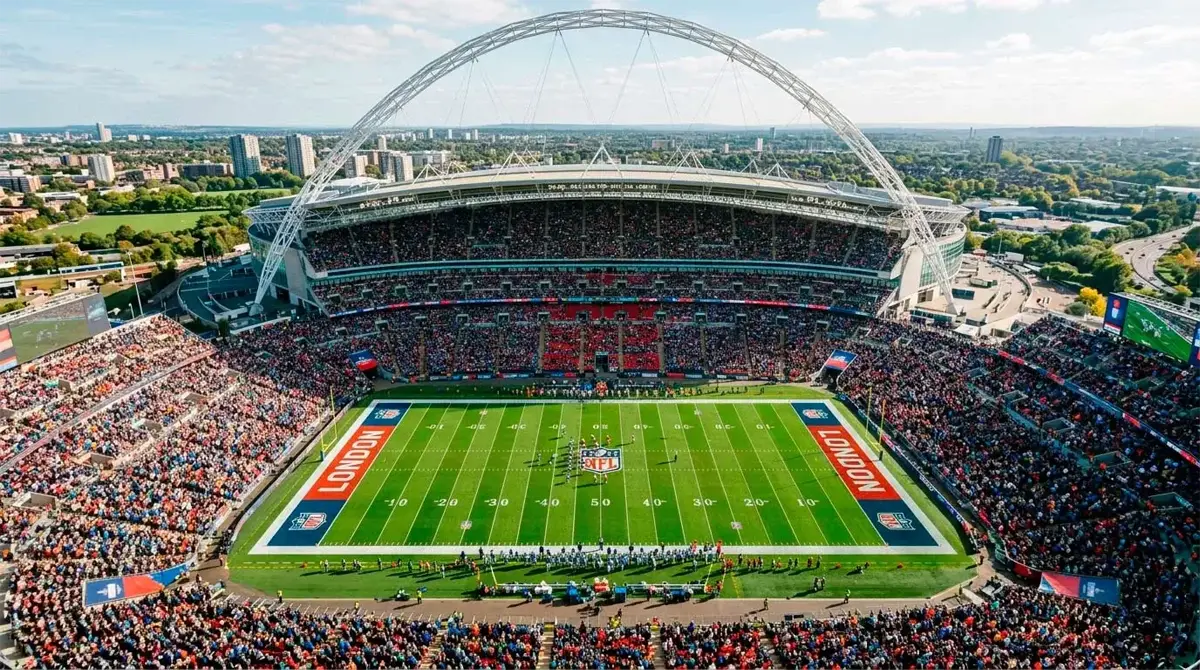
The staking growth has been even sharper than the viewership growth. The 51 per cent year-on-year jump on the Entain group's London-game book — the figure I flagged earlier in the market overview — sits well above what regular-season Sundays produced over the same window. London weeks now contribute disproportionately to the annual NFL betting handle in Britain. A typical mid-season Sunday produces a fraction of the prop-bet volume a London game does, because the betting window is compressed into a single early kick-off and the matinee feels like an event rather than a routine.
Henry Hodgson, the NFL's General Manager for the UK and Ireland, framed the league's commitment to London in straightforward terms in a recent interview: "The NFL has made a commitment to London over a long period of time. This will be the 19th season that we've played games in London, so we're heading to a 20-year anniversary that we're all so excited about celebrating in 2027." That long horizon matters for bettors because it tells you the calendar is going to keep expanding rather than contracting. Three London games are scheduled for 2026, part of a record nine international fixtures that now include Mexico City and a debut Berlin slot in addition to Dublin, Madrid, and the established London venues.
The betting implications are worth thinking through. London games kick off at 14:30 BST — that's 09:30 Eastern, 06:30 Pacific for the visiting roster's body clock. There are real, if subtle, performance effects on west-coast teams playing matinee football in another time zone. The compressed pre-kick betting window concentrates line movement into a few hours rather than spreading it across a full Sunday slate, which changes how value emerges and disappears. The Wembley and Tottenham Hotspur Stadium fixtures attract slightly different staking patterns from each other, and the betting tree on a London game frequently runs deeper than a regular-season fixture because both books and bettors have had longer to prepare. The full strategic treatment of how to approach Wembley and Tottenham fixtures sits in the dedicated London Games player props guide.
How I Actually Read an NFL Player Prop Before Staking Money on It
My personal pre-bet checklist for a player prop fits on a postcard. I've kept it shorter over the years rather than longer, because the longer your checklist gets, the more you talk yourself into bad bets dressed up in research. Three checks reliably matter; the rest is noise.
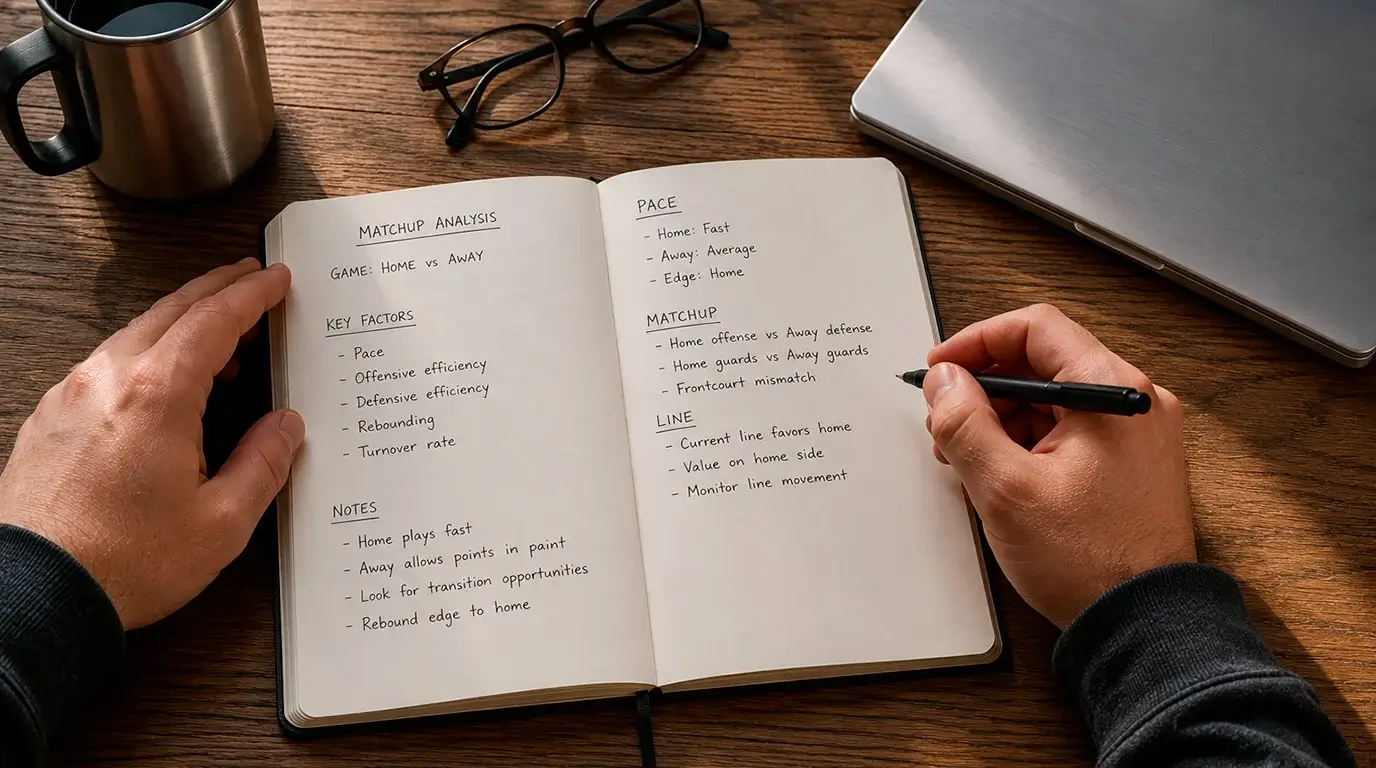
The first is pace of play. NFL teams run wildly different tempos, and the gap between a top-ten pace offence and a bottom-ten pace offence is roughly ten per cent more offensive plays per game when both sides happen to play fast. More plays means more passing attempts, more receiving targets, more rushing carries — more of everything that feeds a yardage line over. When I see a matchup between two top-ten pace teams I lean toward overs on the yardage props of both teams' featured skill players. When I see a matchup between two slow-tempo, ball-control offences, I lean unders. The ten-per-cent gap is not theoretical; it's reliable enough to bake into a strategy.
The second is matchup. Defensive rankings against the pass, against the run, and against specific position groups (slot receivers, tight ends, edge rushers) tell you whether a player is facing favourable conditions or a brick wall. A starting receiver facing a top-five cornerback in shadow coverage rarely beats his receiving-yards line. A goal-line back facing a bottom-five rushing defence in the red zone is shorter on anytime TD than the published price often reflects. The matchup work doesn't have to be sophisticated; you just need to know which defences are good against which roles, and check before betting.
The third is line shopping. The same player can be priced at meaningfully different lines and odds across the UK books on any given Sunday. The anytime TD for a star running back might be 8/11 at one bookmaker, 4/6 at another, and 4/5 at a third. Those differences compound across a season. If you only have one account, you're betting with the price you happen to see — which is not the best price available, almost by definition. Two or three accounts at major UK books is the minimum for anyone betting more than a few times a month.
The shortlist: pace of play, defensive matchup, and line shopping. Everything else — weather, individual coaching tendencies, historical splits — is a refinement once those three are in place. A team in the top ten of pace ranking averages about ten per cent more offensive plays per game, and that single statistic does more for prop-betting accuracy than any other I know.
Discipline matters more than the framework. The Pickswise prop-tracking team — public records, not promotional copy — produced 59 winning player props and 7.7 units of profit across the 2025/26 regular season and the first three rounds of the playoffs. That's a positive return over hundreds of selections, which is the realistic ceiling for a disciplined player-prop bettor. Most punters do worse than break-even. The ones who do better almost universally apply some version of the three-check framework above, plus stake-size discipline they don't deviate from when they're feeling clever.
Keeping NFL Player Props a Hobby, Not a Habit
Player props are a high-volume, low-edge format. That's the polite way of putting it. The less polite way is that they are designed to keep you placing more bets, with smaller stakes, more often, for longer — and the structure of an SGP-driven sportsbook app makes that pattern feel like fun rather than like a problem. Every NFL bettor in Britain should know what the support infrastructure looks like before they need it.
The three names that matter are GamCare, GamStop, and BeGambleAware. GamCare runs the National Gambling Helpline and offers free, confidential support to anyone affected by gambling harm. GamStop is the national self-exclusion scheme — a single registration that blocks your account access at every UKGC-licensed online operator for a period you choose, from six months upward. BeGambleAware is the umbrella charity funding research and support services. Every legitimate UK sportsbook has direct links to all three in the footer and inside the account settings. None of them charge for any of their services.
Inside your bookmaker account, three tools are standard at every UKGC-licensed operator: deposit limits (daily, weekly, monthly caps you set yourself), reality checks (pop-up reminders of how long you've been in session), and self-exclusion (account suspension for a defined period). Setting a deposit limit the moment you register, before you start betting, is the single most underused tool in British gambling. It costs nothing, takes 30 seconds, and acts as a hard ceiling on a bad afternoon. The light-touch financial vulnerability check at £150 net deposits over 30 days that operators have been required to run since February 2025 is not a substitute for your own limit — it's a regulatory backstop, not a personal budget.
The broader regulatory direction tells you something about where the system is heading. Online slot stake limits came into force in 2025 — £5 per spin for players aged 25 and over, £2 per spin for those aged 18 to 24, reflecting evidence that the youngest adult bracket carries elevated risk. NFL player props sit outside the slot framework, but the same protective instinct shapes the wider UK gambling environment.
If anything in this section makes you uncomfortable, that's the signal — not a reason to keep reading. The helpline number for GamCare is searchable and access is anonymous. The bet you don't place today is the bet that doesn't lose tomorrow.
Frequently Asked Questions About NFL Player Bets in the UK
What exactly is an NFL player bet and how does it differ from a game bet?
An NFL player bet is a wager on an individual player's statistical performance — passing yards, rushing yards, receiving yards, touchdowns scored, tackles or sacks recorded — rather than on which team wins or covers a margin. The match result is irrelevant. If you back Josh Allen over 250 passing yards and he throws for 290 in a losing performance, your bet wins. A game bet, by contrast, settles on team results. Player props and game bets are sold side by side in every UK NFL betting tree but they're answering completely different questions.
Can I legally place NFL player props from the UK?
Yes, provided you bet with a bookmaker holding a current UK Gambling Commission licence. You can verify a licence in 30 seconds on the public register at the regulator's website — every legitimate operator must display its licence number in its footer. Offshore sportsbooks, including most US-based brands like DraftKings and FanDuel, are not licensed to accept bets from UK residents. Betting through an unlicensed operator strips you of UKGC consumer protections and dispute-resolution rights. Stick to UKGC-licensed bookmakers — there are plenty of them, they compete hard for NFL custom, and the protection costs you nothing.
What kinds of touchdowns count towards an anytime touchdown scorer bet?
Rushing touchdowns and receiving touchdowns both count for the player who carries the ball into the end zone or catches it for a score. Fumble recoveries in the opponent's end zone count for the recovering player, though this is rare. Two-point conversions do not count as touchdowns — even though they involve crossing the goal line, the conversion is scored separately. Crucially, a passing touchdown does not count for the quarterback who threw it. A quarterback's anytime TD bet only wins if he himself crosses the goal line as a runner or receiver. This is the single most common source of disputed bet tickets at UK bookmakers.
What is a Same Game Parlay in NFL betting?
A Same Game Parlay — usually called Bet Builder at UK operators — is a single combined ticket containing multiple legs from the same NFL match. All legs must win for the ticket to settle as a winner. Unlike a traditional accumulator, where each leg is treated as independent, an SGP is priced with internal correlation adjustments accounting for the fact that some legs reinforce each other and others contradict. The combined odds are calculated by the bookmaker's pricing engine, not by simple multiplication of individual leg prices. SGPs carry meaningfully higher bookmaker margins than straight bets, which is why they should be approached with smaller stakes than your regular bet size.
What should I look for when picking a UK bookmaker for NFL player bets?
Seven criteria in order of importance for a prop bettor: a current UKGC licence verifiable on the public register; market depth (how many distinct player props are posted for a regular Sunday game); pricing competitiveness against the market; quality of the Bet Builder product; live in-play prop availability; cash-out functionality; and withdrawal speed. The single best test is to compare prices on three or four bets you'd realistically place across two or three accounts over a few weeks. Don't choose on the size of the welcome offer alone, and don't choose on TV advertising spend.
Why is the UK NFL betting market growing so fast in 2025–2026?
A combination of fan-base growth, broadcast expansion, and London-game momentum. The NFL now has more than 13 million fans in Great Britain, with four million classed as avid weekly viewers. Sky Sports's renewed deal increased live NFL coverage by almost 50 per cent from the 2025/26 season, and Channel 5 returned the NFL to free-to-air UK television for the first time in two decades. Three London games in 2026, plus a record nine international fixtures league-wide, keep NFL on the UK calendar outside the traditional Sunday-night window. Customer counts at major UK and Irish bookmakers climbed 65 per cent year on year on NFL through 2024/25, with total stakes up 46 per cent.
Where to Take Your NFL Player Betting Next
If you've read this guide top to bottom, you now know more about NFL player props than most people queueing at the Wembley turnstiles ever will. You know what a player prop is, how it differs from a match-winner bet, what the major prop categories cover, why the anytime TD scorer market is the one new bettors lose most frequently on, and how Same Game Parlays are mathematically structured to favour the operator. You know the UK regulatory framework that governs every legitimate sportsbook serving British customers, and roughly where the duty reform of 2027 is going to push prices.
That foundation is enough to bet sensibly. It is not enough to bet sharply. The five companion guides linked above are where the operational detail lives — the London Games breakdown, the SGP correlation maths, the UK regulation deep dive, the anytime TD scorer settlement rules, and the bookmaker comparison. If you take one practical step today, make it this: pick the cluster mapping to the bet you place most often and run your next ticket through whatever framework you find there.
And the boring rule that beats every clever angle here: set a deposit limit before you stake anything. The bet that doesn't lose is the one that never gets placed.
Related posts

Passing Yards Prop Strategy for NFL: Reading Lines, Pace and Defensive Context
NFL RB Committee Prop Strategy: How to Bet Backfields That Refuse to Anoint a Workhorse