
NFL Bankroll Management and Prop Betting Stakes
 Available in US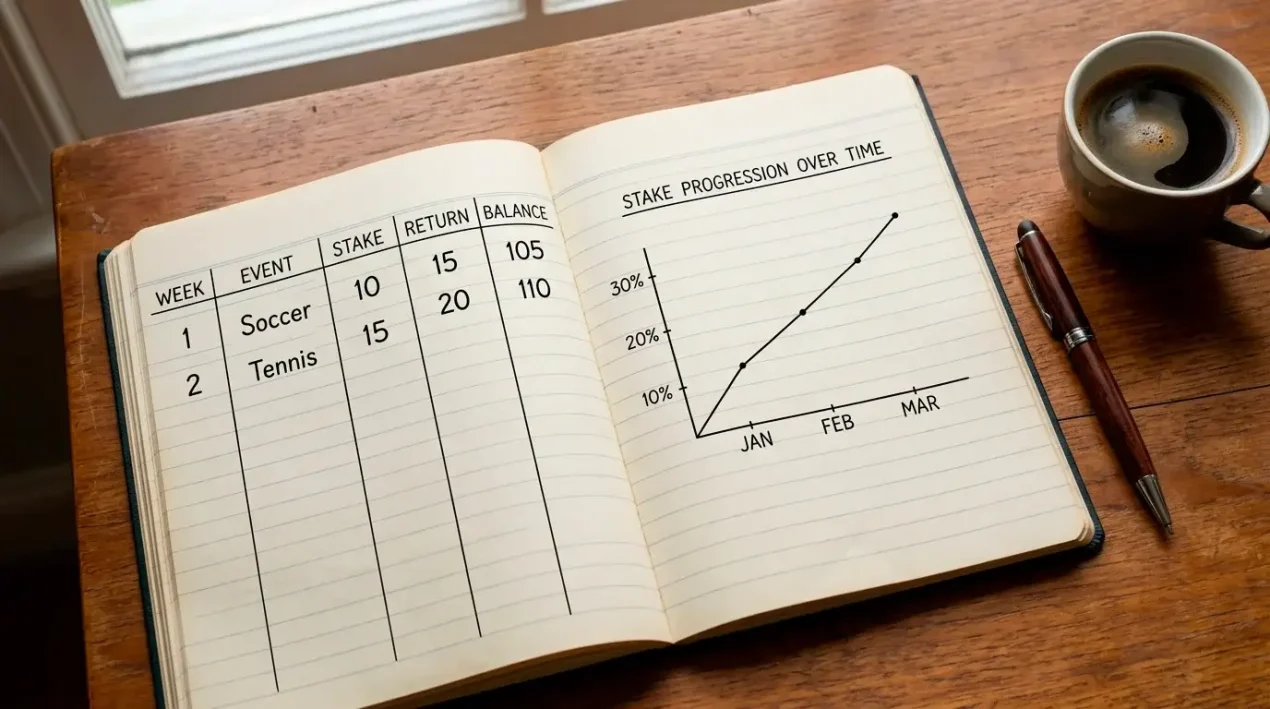
Common NFL Bankroll Management Mistakes and Fixes
Three seasons into my NFL betting I went on a 7-bet losing streak across two Sundays. Each loss was small individually – between £15 and £40 – but the compounding effect was that my bankroll dropped by about 28% from where it had peaked four weeks earlier. The hit rate I had been running was around 56%, comfortably profitable at standard prop pricing. The 7-bet skid was statistically unremarkable. What was remarkable was how rattled I was by it. I had been treating each bet as a standalone decision, not as one observation in a larger sample, and the drawdown felt like failure when it was actually expected variance.
The bankroll management framework I built after that experience is the single most important discipline I have applied to NFL betting. It is also the single discipline most casual UK punters skip entirely. The framework is not exotic – it is essentially the same risk management that any disciplined trader applies to any speculative activity. The work is in actually doing it weekly, not in understanding it intellectually.
If you are just starting out, applying strict staking rules to your first NFL prop wagers will protect your initial deposit from early variance.
What a bankroll actually is
The first conceptual fix that matters is treating your NFL betting bankroll as a separate pool from your general finances. The bankroll is the capital allocated specifically to NFL prop betting, ring-fenced from monthly income, savings, and other obligations. The size of the bankroll should reflect what you can afford to lose entirely without affecting your living standards, your savings goals, or your mental wellbeing.
The structural reason for the ring-fence is psychological more than financial. A bettor who is wagering with money they need for rent will make different decisions from a bettor who is wagering with discretionary capital. The former chases losses, sizes positions emotionally, and breaks discipline when the variance turns against them. The latter can size rationally, accept variance as it comes, and stay focused on long-term hit rate rather than weekly outcomes.
The £150 net deposit threshold over 30 days that triggers UK Gambling Commission affordability checks gives a useful structural anchor for what counts as recreational versus serious bankroll. A bettor whose monthly deposits stay comfortably under £150 is in clearly recreational territory. A bettor depositing £500 or more per month is in territory where the affordability framework expects you to have documented capacity to afford the deposits. The framework exists for sensible reasons; the same logic should drive your private decisions about what a sensible NFL bankroll size is for you.
The percentage-of-bankroll sizing model
The sizing model I use, and the one most disciplined NFL bettors converge on, is percentage-of-bankroll rather than fixed-stake. The percentage stays constant; the absolute stake adjusts with the bankroll. If the bankroll grows, the stake grows. If the bankroll shrinks, the stake shrinks. The effect is that drawdowns compound less aggressively than they would with fixed stakes, because each subsequent loss is sized against a smaller base.
The percentage band that works for prop betting at moderate edge is 1% to 2% per bet. A 1% per-bet bettor placing 8 bets per Sunday has total weekly stake of 8% of bankroll, which is a manageable variance profile. A 2% per-bet bettor has 16% total weekly stake, which is more aggressive and produces faster growth in good periods but also faster drawdown in bad ones. The choice between 1% and 2% reflects the punter’s risk tolerance and the genuine edge in their selections – sharper edges justify larger sizes, more speculative edges should be sized smaller.
The Kelly criterion provides a theoretical framework for optimal bet sizing given the edge and the price, but in practice most disciplined NFL bettors use a “fractional Kelly” approach – sizing at 25% to 50% of the full Kelly recommendation. The reason is that Kelly assumes perfect knowledge of the true probability, which is never achievable in practice. Fractional Kelly trades off some growth rate for substantially reduced variance, which is a sensible trade for most punters.
The drawdown reality and how to plan for it
The drawdown is the period when the bankroll is below its previous peak. Drawdowns are not an exception to a profitable betting strategy – they are an inherent part of one. A 56% hit-rate bettor running 200 bets per season will experience multiple drawdowns of 10% to 20% over the course of the season, even when the long-run trajectory is positive. The drawdowns feel longer than they are because each individual loss feels significant, but the math is stable.
The planning question is not how to avoid drawdowns but how to size positions such that drawdowns are recoverable without breaking discipline. A 1% per-bet bettor experiencing a 20% drawdown is in a position where 20 to 25 carefully-chosen bets can return them to break-even, which is a 2-to-3-week recovery at typical weekly volumes. A 5% per-bet bettor experiencing the same drawdown needs fewer bets to recover but is also at risk of much larger drawdowns from the same variance, which can compound into a 40% or 50% loss in a single bad Sunday.
The structural insight is that the per-bet percentage you choose determines both the growth rate of the bankroll and the depth of expected drawdowns. The growth and the drawdown depth are essentially linked. A bettor wanting faster growth must accept deeper drawdowns. A bettor wanting shallower drawdowns must accept slower growth. There is no escape from this trade-off, and the disciplined punter chooses their position on the spectrum based on what they can emotionally handle without breaking discipline.
The weekly stake-distribution discipline
The percentage-of-bankroll model needs to be applied not just to individual bets but to the total weekly card. A bettor placing 8 bets at 2% each is committing 16% of their bankroll to a single Sunday. If the entire card loses (which is rare but possible), the drawdown is meaningful. If 5 of 8 lose (a more realistic worst-case at a 56% hit rate), the drawdown is around 6% of bankroll – manageable but not trivial.
My personal discipline is to cap total weekly stake at 12% of bankroll, distributed across 6 to 8 bets sized at 1.5% to 2% each. The bets I rate highest sit at 2%; the bets with thinner projected edges sit at 1% to 1.25%. The total card stays inside the 12% cap regardless of how many opportunities I see in a given week. A week with 12 candidate bets becomes a week with 6 to 8 selected bets – the cap forces selectivity.
The 65% year-over-year increase in NFL bettor volume reported by Entain after the 2024/25 season, with stakes up 46%, reflects the UK market’s overall growth in NFL engagement. Henry Hodgson, the NFL UK GM, framed the trajectory: “There’s a lot of growth, and the UK is at the centre of that international growth as well.” Growth in market participation does not change the math of bankroll management – the same percentage discipline applies whether you are one of 100,000 UK NFL bettors or one of 1,000,000. What changes is the sophistication of the casual competition, which makes selectivity more important rather than less.
Variable-edge sizing and the conviction adjustment
The flat-percentage model works as a baseline, but disciplined bettors layer a conviction adjustment on top. Not all bets carry the same edge, even when the punter has analysed both. A high-conviction bet – one with clear matchup advantage, sharp pricing, and a projection well outside the standard line – deserves a larger position than a marginal-edge bet that just barely clears the threshold for inclusion on the card.
The practical implementation: I use a three-tier sizing scheme within my 1.5% to 2% range. The top tier (2% of bankroll) is reserved for plays where my projected edge is 8% or larger in implied probability terms. The middle tier (1.5%) is for plays with 5% to 8% projected edge. The bottom tier (1%) is for plays with 3% to 5% edge – bets I would consider passing on if the card were already full but include when the slate is light.
The conviction adjustment captures more of the upside from genuine reads without overloading the variance of marginal positions. The Pickswise prop ledger that ran to 59 winning props and +7.7 units across the regular season, wild card, divisional and conference rounds reflects a similar internal tiering. Not every winning bet contributed equally to the +7.7 unit total – the high-conviction plays drove disproportionate returns because they were sized larger when correct.
The ledger discipline and what it teaches
Keeping a bet-by-bet ledger is the discipline that converts intuition into measurable performance. The ledger tracks: date, market, selection, stake, odds, expected value at time of bet, result, and net P&L. The ledger reveals patterns that no amount of post-game analysis can: which prop categories you genuinely beat the market on, which categories you have no edge in, which days of the week or game types you struggle with, and which sizing tiers your hit rate justifies.
For consistent long-term results, follow the weekly updates provided by the top UK American football betting resource.
My personal ledger has taught me, across multiple seasons, that I have a clear edge in QB rushing-yards markets, a marginal edge in receiving-yards markets, and essentially no edge in spread betting. Without the ledger I would have continued betting spreads because they “felt” like good plays. The ledger told me to stop. The reallocation of capital from spread betting to QB rushing markets was probably the single largest improvement I have made to my P&L, and it came from looking at three seasons of data rather than three weeks of recent memory.
The ledger also teaches realistic expectations. A bettor who reviews their season ledger and finds a 54% hit rate at average -110 pricing has earned a roughly 3% return on stakes. That is profitable, but it is not the get-rich-quick image that recreational betting marketing sometimes implies. Reality is that disciplined NFL prop betting at a moderate edge produces returns measured in single-digit percentages of total stakes, applied across hundreds of bets per season. The recreational mindset that expects 50%-plus returns on a season is the mindset that produces the betting decisions that destroy bankrolls.
What’s the right percentage of bankroll to bet on individual NFL props?
One to two percent per bet works for most disciplined NFL prop bettors. The lower end (1%) suits punters who place 10 or more bets per Sunday card or who run on tighter perceived edges. The higher end (2%) suits punters who place 4 to 6 bets per Sunday card on confidently-projected spots. The aggregate weekly stake should sit at 10% to 12% of bankroll, which keeps drawdown depths in a manageable range even on bad-variance weeks. Sizing above 3% per bet is generally too aggressive and produces variance that breaks the discipline of most bettors during bad runs.
Should I increase my NFL bet sizes when I’m on a winning streak?
Only via the percentage-of-bankroll model, which automatically increases your absolute stake size as the bankroll grows. Explicitly increasing the percentage during a hot streak is a classic emotional mistake – the streak does not change the underlying edge of your future bets, but the increased percentage raises the risk that the inevitable mean-reversion will produce a much deeper drawdown than your discipline can absorb. The right mindset is that good runs are bankroll growth, not signals to abandon the sizing framework that produced the growth in the first place.
If bankroll thinking sharpens your interest in markets where responsible betting tools intersect with disciplined play, the related read is how GamStop and UK responsible-gambling tools fit alongside disciplined NFL betting.
This material was created by the YardLedger team.
Related posts

Passing Yards Prop Strategy for NFL: Reading Lines, Pace and Defensive Context
NFL RB Committee Prop Strategy: How to Bet Backfields That Refuse to Anoint a Workhorse