NFL First Touchdown Scorer Odds and Markets
 Available in US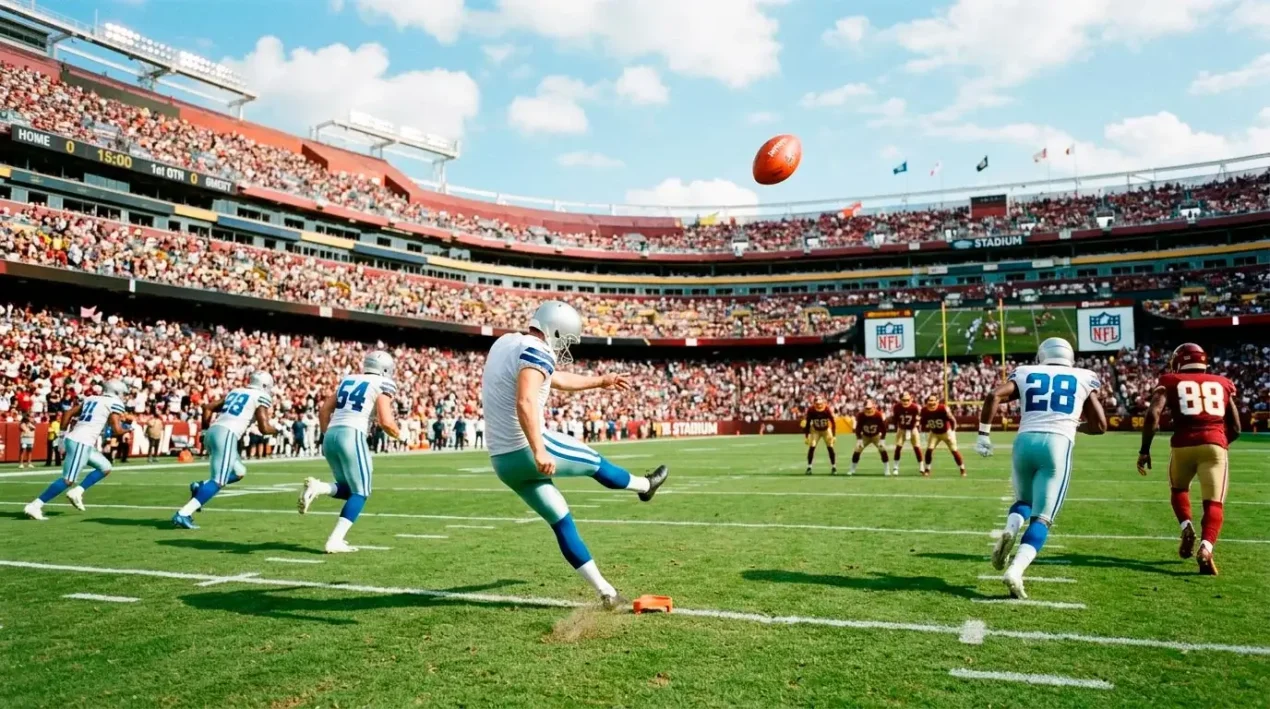
Capitalizing on High-Variance First Touchdown Scorer Odds
One Sunday in late October, I had a first touchdown scorer bet on a goal-line back at +800. The opening drive of the game went 11 plays, 65 yards, and my pick punched it in from 2 yards out at 3:47 of the first quarter. The bet cashed at the longest first-half price I had bet that month. The total stake had been £10, the return was £90 including stake, and that single ticket covered most of the losing first-TD bets I had placed across the previous five Sundays.
That is the structure of the first touchdown scorer (FTD) market in one paragraph. The variance is brutal, individual hits are spectacular, and the long-run profitability depends on identifying a small number of structurally mispriced spots and accepting that you will lose more often than not. It is not a market for punters who need a high hit rate to feel comfortable. It is a market for punters who understand variance and can size their positions to ride out the inevitable losing runs.
What separates FTD from ATD
First touchdown scorer is a different statistical product from anytime touchdown scorer, despite sharing many of the same player names on the bet slip. ATD is “did this player score at any point in the game”. FTD is “was this player the first to score”. The difference in probability is enormous – a player whose ATD price is +200 (implying a 33% probability of scoring at all) might have an FTD price of +900 (implying a 10% probability of being the first to score).
The structural reason for the price ratio is that there is only one first touchdown in each game. If both teams combine for 5 touchdowns, only one of the players who scored gets credit for the FTD market. The other four are wins on ATD but losses on FTD. The market therefore prices FTD at substantially longer odds than ATD, and the implied probabilities are constrained by the requirement that the team-level FTD probabilities sum to roughly 100% (with a small allowance for “no touchdown scored” outcomes in low-scoring games).
The implication is that FTD pricing depends heavily on which team is more likely to score first, which in turn depends on the game script, the opening drive matchup, and the projected pace of play. A team favoured by 6 points with an effective opening drive scheme has perhaps a 55% probability of scoring the first touchdown of the game; the underdog has 40%; “no TD by halftime” gets the remaining 5%. The individual player probabilities then distribute within those team probabilities according to the same role-share patterns that govern ATD.
The opening-drive matchup that drives everything
The single most important variable for FTD selection is the opening-drive matchup. Some defences are notoriously slow starters, giving up touchdowns on the opening possession at rates 50% higher than their season average. Some offences script their first 15 plays meticulously, executing those scripted drives with substantially higher efficiency than their broader offensive rate. The combination of a scripted-offence team facing a slow-starting defence is the cleanest structural setup for an FTD-friendly opening drive.
The data on opening-drive efficiency is publicly trackable. Team-level metrics for “opening drive touchdown rate” and “opening drive yards per drive” are tracked across NFL analytics sites. The dispersion is meaningful – the top teams score on roughly 35% of their opening drives, while the bottom teams sit around 12%. Defences show similar dispersion in opening-drive TD rate allowed. Matchups that put a top-quartile opening-drive offence against a bottom-quartile opening-drive defence are the spots where FTD becomes a structurally attractive market.
The 2025 international games drew average viewership of 6.2 million across NFL Network broadcasts, a 32% increase year over year. The growth has accelerated UK punter attention on opening drives in particular, because the early window of an NFL Sunday in UK time corresponds to the most heavily-watched live action. Henry Hodgson, the NFL UK GM, framed the trajectory: “There’s a lot of growth, and the UK is at the centre of that international growth as well.” That growth has translated into more casual UK money flowing into FTD markets on headline names, while leaving the second-tier role-specific FTD plays comparatively undermarketed.
The role-share distribution within a team’s FTD pool
Once you have identified a team as the likely first-TD scorer side, the question becomes which of their players is most likely to be the actual scorer. The role-share patterns that govern ATD apply here too, but with different weighting because the first TD often comes early in the game when offences are most heavily script-bound.
The lead RB is typically the largest single FTD candidate within a team’s pool, because opening-drive scripts often feature designed runs in the red zone. The WR1 is the second-largest candidate, reflecting their target share on play-action concepts that scripts favour. The TE is the third candidate, with goal-line specialists and backup RBs sharing the remainder.
The interesting nuance is that the “goal-line specialist” role is heavily concentrated within FTD probabilities for teams that reach the goal-line on their opening drive. If a team gets to the 5-yard line on a scripted drive, the goal-line back’s FTD price is structurally more attractive than his pre-drive price implied. The pre-game pricing on the goal-line back as the FTD scorer often runs at +1500 to +2500, which is a long shot. But the conditional probability of his being the FTD scorer, given that his team reaches the red zone on the opening drive, is substantially higher – often 25% to 35% in that conditional state.
The QB rushing-TD as FTD opportunity
Mobile QBs with first-quarter goal-line packages create a specific FTD edge that the standard market often does not capture. The FTD price on a mobile QB scoring a rushing TD as the first score of the game can run at +1800 to +2500, which is a long shot in implied probability terms. The true probability for a mobile QB whose team has a 35% probability of opening-drive TD, with a 40% share of red-zone carries within that team, is closer to 14% – which translates to a fair-value price of about +600.
The mismatch between the offered price and the fair-value price exists because casual UK punters do not yet associate mobile QBs strongly with FTD markets. The pattern recognition runs heavily toward “QB scores anytime” markets, which are bet more often. The first-touchdown variant is a derivative product that has not seen the same attention.
The Pickswise prop ledger that ran to 59 winning props and +7.7 units across the regular season, wild card, divisional and conference rounds had a small but meaningful contribution from mobile-QB FTD plays at long prices. The hit rate on these plays is low – perhaps 1 in 8 to 1 in 10 – but the price multiplier on the hits is substantial enough that a small position size compounds positive expected value over time.
The variance management discipline
The variance characteristics of FTD make it the prop category most susceptible to long losing runs. A bettor running an FTD portfolio with selections priced at +800 average and a hit rate of 12% (which is profitable at that average price) will experience losing runs of 10 to 15 consecutive bets multiple times per season. The runs feel like failure when in reality they are statistical normality.
The sizing discipline for FTD must accommodate this variance. A bettor sizing FTD bets at 1% of bankroll, placing 4 FTD bets per Sunday, will lose 4% of bankroll on a 0-of-4 Sunday – which will happen multiple times per season. The compensating gains come from the 1-of-4 Sundays where a single +800 winner returns 9% of bankroll, plus the rare 2-of-4 Sundays where multiple FTD bets cash. The long-run distribution is volatile but positively skewed when selections are filtered properly.
The structural fact: 24 of the last 35 Super Bowls have featured a touchdown scored from the 1-yard line, around 60% of championship games. The same pattern of goal-line TDs holds in regular-season opening drives – the player who takes the 1-yard carry is often the goal-line specialist, not the headline running back. FTD pricing on goal-line specialists often runs at +800 to +1500, which is structurally cheap given their conditional probability of scoring in any drive that reaches the red zone.
The “no TD by halftime” market and its hedging use
UK books often offer adjacent markets to the FTD pool that allow indirect plays on the FTD outcome. The most useful of these is “no touchdown by halftime” or “field goal first” – markets that effectively bet against the opening-drive TD scenario. These markets typically price the “no TD first half” outcome at +400 to +500 in tight defensive matchups, and at +800 or longer in shootout matchups.
The strategic use of these markets is as a hedge against an FTD long-shot bet. The hedge converts a single-outcome long-shot bet into a multi-outcome structured bet with profit in two scenarios and loss in only one. The expected value depends on the relative pricing of the two markets, and the hedge does not always make sense. When it does – when the FTD long shot has a substantially higher true probability than implied and the “no TD” market is fairly priced – the combined position has structural value beyond what either bet alone provides.
The bet selection workflow for FTD markets
My weekly FTD workflow runs alongside but separate from my ATD workflow. The FTD filter starts with opening-drive matchup quality: scripted-offence teams against slow-starting defences. The second filter is role-share within the favoured team, identifying the players whose conditional probability of being the FTD scorer is structurally higher than their pre-drive implied probability. The third filter is price – FTD plays only make sense when the offered price is at least double the fair-value price implied by the matchup analysis.
The selection volume is intentionally small: 2 to 4 FTD plays per Sunday at the most. Sized at 0.5% to 1% of bankroll each, the total weekly FTD exposure is 2% to 4%, leaving the bulk of the weekly card for higher-hit-rate markets. The FTD plays serve as the variance-driven upside component of the broader portfolio rather than the core position layer.
The discipline is to size small enough that the inevitable losing weeks do not break overall bankroll trajectory, and to stay rigorous about filter quality even when the candidate list is thin. The Entain-reported 65% year-over-year increase in NFL bettor volume after the 2024/25 season, with stakes up 46%, reflects strong UK growth in casual NFL prop betting, much of it on the highest-variance markets. The compensating opportunity for the disciplined punter is that the casual money concentrating on these markets has not tightened pricing on the role-specific second-tier players, where the structural inefficiencies remain meaningful.
Is the first touchdown scorer market profitable for UK punters over a full NFL season?
It can be, but only with strict selection discipline and careful position sizing. The market has high variance – hit rates run in the 10% to 15% range for filtered selections – and bettors must accept long losing runs of 10 or more consecutive bets as statistically normal. The profitable structure relies on identifying spots where the offered price is at least double the fair-value price implied by the matchup analysis, particularly goal-line specialists and mobile-QB rushing-TD plays. Position sizing should reflect the variance: 0.5% to 1% of bankroll per FTD play, with 2 to 4 selections per Sunday.
Should I bet first touchdown or anytime touchdown on the same player?
It depends on the offered prices relative to your matchup read. For a player in a structurally favourable spot, the ATD market typically offers better expected value because the higher hit rate produces more consistent P&L. The FTD market on the same player offers a much lower hit rate but a much larger price multiplier on wins. A bettor who can absorb variance and is sizing positions appropriately should consider FTD bets selectively, particularly when the player is a goal-line specialist whose conditional probability of scoring early in the game is substantially higher than the pre-drive market price implies.
If first-TD variance sharpens your interest in the related but distinct longest-play prop family, the related read is how longest-play markets create their own structural inefficiencies on UK books.
This material was created by the YardLedger team.
Related posts

Passing Yards Prop Strategy for NFL: Reading Lines, Pace and Defensive Context
NFL RB Committee Prop Strategy: How to Bet Backfields That Refuse to Anoint a Workhorse