NFL Receiving Yards Prop Strategy and WR Odds
 Available in US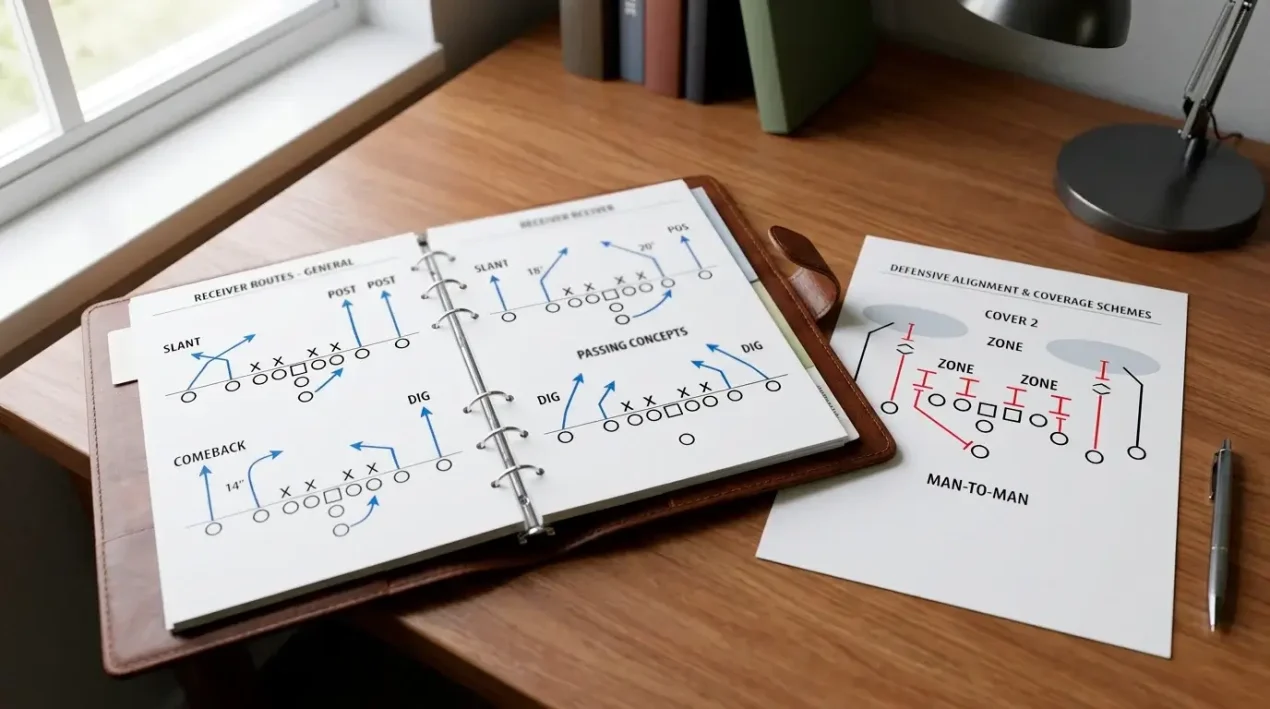
Evaluating WR Air Yards Over Standard Receptions
The shift happened during a season where one of my favourite props – receptions over 5.5 for a slot wideout I knew well – kept cashing while his receiving-yards prop kept missing. He was hitting six and seven catches almost every week. Every single one of them was a checkdown or a six-yard slant. The bookmaker had figured out the volume. The air-yards data, which measures how far downfield the average pass to him travelled, had been telling that story for weeks before I noticed. I was buying receptions, but the yards were never going to follow.
That season taught me the practical version of an obvious lesson. Receiving-yards props are not catch-count props. They are downfield-target props with a catch-rate adjustment. Once I rebuilt my framework around air yards as the leading indicator, I stopped getting punished by high-volume short-route receivers and started finding genuine value on perimeter targets nobody else was watching.
Target share, air yards and the math of the prop
Three numbers do most of the work on any receiving-yards projection. Target share, which is the percentage of team passing attempts directed at a particular receiver. Air yards, which is the cumulative distance the football travels in the air to that receiver, whether the catch is made or not. And aDOT, average depth of target, which is air yards divided by targets. Pull those three together and you have a more honest projection than any catch-count baseline.
A starting wide receiver with a 22% target share and a 12-yard aDOT, on a team running 35 pass attempts, is projecting at roughly 7.7 targets for 92 air yards. Apply a typical 65% catch rate on a 12-yard aDOT and you are looking at around 60 yards of receiving production. UK bookmakers price this band roughly correctly for headline starters, with typical reception lines in the 3.5 to 7.5 range. The edge lives in the disconnect – receivers whose target share, aDOT or both are about to change due to a matchup or a depth-chart shift.
Tight ends are the cleanest case for this kind of analysis because their numbers are more stable week-to-week. A TE running a 6-yard aDOT every week is unlikely to suddenly run a 12-yard aDOT in any single game. UK lines on tight ends rarely sit above 50 receiving yards for that exact reason – the air-yards profile of the position simply does not support higher lines, even for elite players. Knowing this saves you from over-betting tight end overs in spots where the production is structurally capped.
Slot versus perimeter receivers play different prop markets
The most actionable distinction in the receiving market is slot versus perimeter alignment. A slot wide receiver running 6 to 9-yard routes lives off catch volume, short-yardage targets and yards after catch. His receiving-yards line is built on consistency – he is going to get his targets, he is going to catch most of them, and the yardage will be whatever yardage the underneath routes produce. Variance is low.
A perimeter wide receiver running 14 to 18-yard routes lives off chunk plays. His target volume is lower, his catch rate is lower, but a single 35-yard completion can swing his prop in one play. Variance is high. The implication for prop bettors is that perimeter receivers are more volatile in both directions – bigger edges available, bigger losses possible.
The matchup question therefore changes shape depending on alignment. For a slot receiver, the matchup that matters is the defensive nickel corner and the linebackers handling intermediate zones. For a perimeter receiver, it is the boundary cornerback and the safety help over the top. UK punters who treat all receiver matchups as “WR versus CB” miss most of the actual structure. The slot receiver’s most relevant defender is rarely the team’s best corner, who is usually deployed outside.
Shadow coverage and what it actually does to the line
Some defences travel their top cornerback to shadow the opposing WR1 across the field, rather than playing a side-of-field assignment. Shadow coverage matters because it concentrates the defensive talent on a specific target rather than diluting it. A receiver running into shadow coverage by an elite corner typically loses 15 to 25 air yards from his weekly projection, which translates to roughly 8 to 15 receiving yards.
UK bookmakers know which defences shadow and which do not. The lines reflect it. But the price absorption is uneven. Some books move the shadowed receiver’s line by a full 10 yards. Others move it by 5. Line shopping during a shadow-coverage week is, in my view, one of the most reliable sources of small but meaningful edge across the prop market – 250 to 300 passing yards is a typical QB band, and the same logic of looking for the soft number among UK operators applies to receiving lines that have been shadowed.
The flipside is that shadow coverage by a top corner often opens the rest of the receiver group. The WR2 and the slot on the same team see their target share rise as the QB looks away from the shadowed primary. Those secondary receivers are sometimes the better prop bet in a shadow-coverage week. The market prices the headline matchup but undervalues the downstream redistribution.
Tight ends are the most consistently mispriced position
Tight end receiving props are, on balance, the most mispriced segment of the UK prop board, but they are mispriced in both directions and you need to know which way before you bet. Two structural issues drive the mispricing. Tight ends have higher snap-share volatility than wide receivers because blocking duties can be reassigned silently. And tight end target share is more script-dependent than wide receiver target share – a leading team’s tight end gets more red-zone work, while a trailing team’s tight end gets less.
What this means in practice: a starting tight end on a favoured team with a positive script projection is a structurally better receiving-yards over candidate than the surface stats suggest. The script gives him red-zone targets and chunk plays in the second half. Conversely, a tight end on a heavy underdog is a structural under – the team is going to throw deep to wide receivers, not check it down to the TE.
The variance on tight end props is also asymmetric. A bad day is 12 yards on 2 catches. A good day can be 90 yards on 6 catches with a touchdown. Bookmakers price the median outcome. The distribution around that median is uneven, with more upside than downside, which makes tight end overs at decent prices a recurring source of value when the script projection cooperates.
Pace, volume and the receiver layer
When two top-ten pace teams meet, the combined game runs about 10% more offensive plays than the average matchup. For receivers, those extra plays mean more pass attempts, which means more targets, which means more receiving yards even with no efficiency change. A 22% target share on 35 pass attempts is 7.7 targets. A 22% target share on 39 pass attempts is 8.6. That extra target alone, at average catch rate and yards per reception, can be the margin on a receiving-yards prop.
The pace-adjustment edge is cleanest on the WR1 of a team that throws often. A high-volume passing offence facing a high-pace opponent produces inflated receiving lines for the headline receiver, and the market is generally aware. But the secondary receiver on that same team – the WR2 or slot guy whose target share is lower – often has his line under-adjusted relative to the volume increase. He is the more efficient over play in a pace-up environment.
Slow-pace matchups suppress everything. Two ball-control offences meeting produces fewer passing attempts, fewer targets, fewer receiving yards. Receiving lines in those games are honest. There is not much edge to be found except on receivers whose script-based usage diverges significantly from the season-long pattern.
How I run through a receiving prop before I bet
The checklist is short. What is the receiver’s target share trend, weighted toward the last four games rather than the season average? What is his aDOT, and how does the matchup adjust it – shadow coverage, soft underneath zones, deep safety help? What does the pace adjustment imply about team-level pass attempts? What is the script projection, and which receiver type benefits? Where is the line relative to the projection I have built?
If the projection sits 7 yards or more above the line, I take the over. If it sits 7 yards or more below, I take the under. Inside that band, the market is doing its job and I pass. Discipline on the size of the gap is what separates a sustainable approach from a series of coin flips dressed up as analysis.
Does shadow coverage by a top corner systematically reduce a WR’s receiving-yards line value?
Yes – typically by 8 to 15 yards on the receiving-yards line and a meaningful tightening on anytime TD prices. The market prices it, but unevenly across UK books. The downstream effect is that the WR2 and slot receivers on the same team often have their lines under-adjusted relative to the redistributed target share, which is where the secondary value sits in a shadow-coverage week.
Why do tight ends rarely have receiving-yard lines above 50 yards in UK bookmaker trees?
The position’s air-yards profile structurally caps the upside. Most tight ends run a 6 to 8-yard average depth of target, which means even with high catch rates and 6 to 7 targets they are projecting under 60 yards in a typical game. UK lines on tight ends sit in the 30 to 45-yard range for most starters and only push above 50 yards for the handful of elite players whose teams actively scheme deeper routes for them.
The natural follow-up for anyone working the receiver market is the close look at red zone target share and how it actually translates into TD-scoring props.
This material was created by the YardLedger team.
Related posts

Passing Yards Prop Strategy for NFL: Reading Lines, Pace and Defensive Context

NFL RB Committee Prop Strategy: How to Bet Backfields That Refuse to Anoint a Workhorse