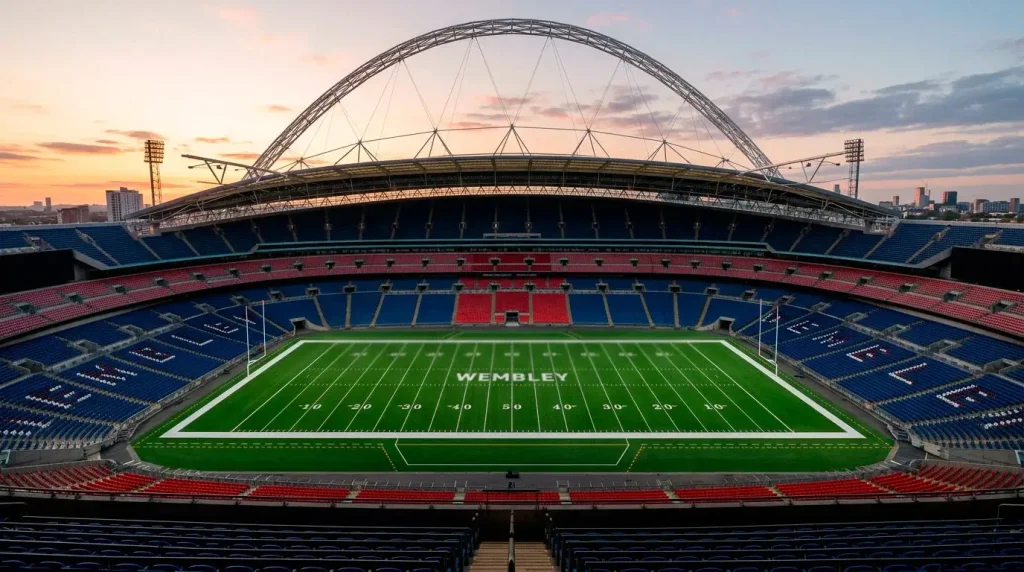
Best UK Bookmakers for NFL Player Props
 Available in US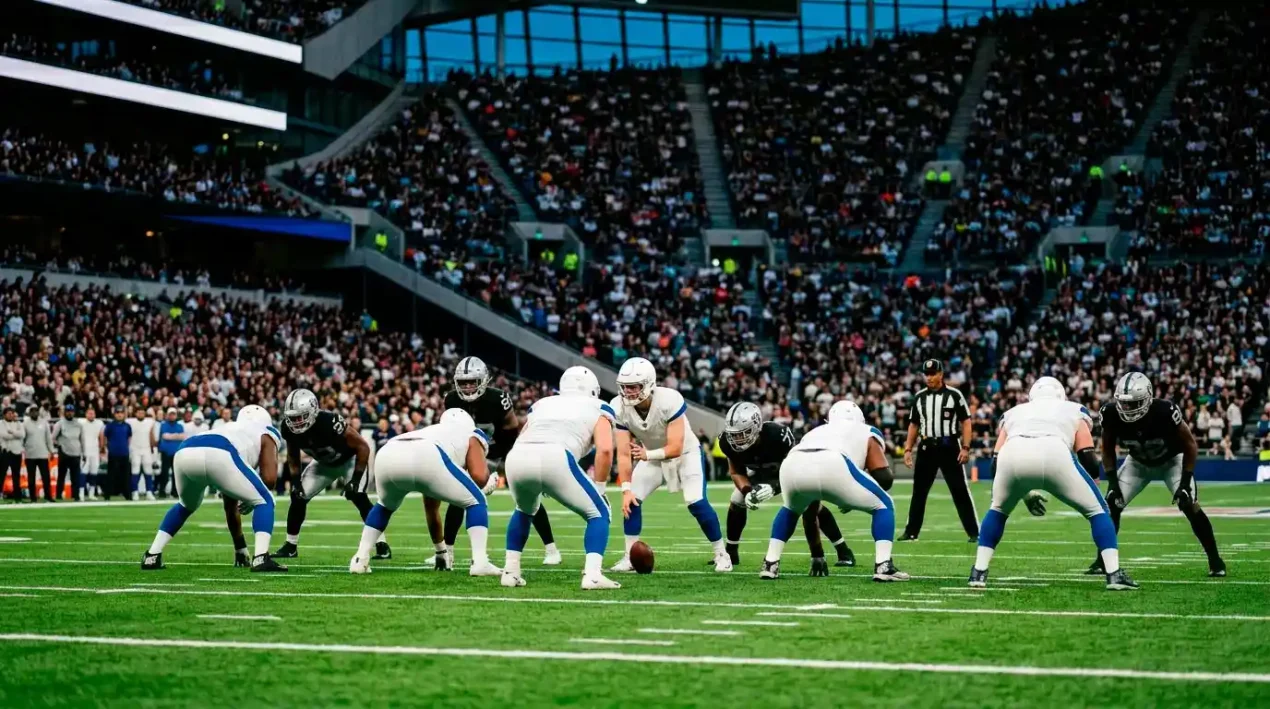
Top UK Bookmaker Accounts for NFL Player Props
The UK NFL betting market doesn’t look like the US one. There are fewer operators, the regulation is tighter, and the depth of the prop tree on a given Sunday is usually narrower. Some British bettors find this frustrating, particularly those who’ve read American gambling content where the market includes thirty-deep WR receiving-yardage trees and exotic prop families that simply don’t exist on UK boards. I want to push back on that frustration before I start naming names, because the UK product has compensating strengths that get under-acknowledged.
The strengths are consumer protection that actually works, a withdrawal-speed standard that puts US offshore operators to shame, regulatory backing that means you can dispute settlements and reach a binding ADR ruling, and a stable of operators who have, between them, built genuinely competitive NFL products over the last five seasons. The Remote Casino, Betting and Bingo segment of the UK regulated market generated £7.8 billion of gross gambling yield in the year to March 2025 — that scale of revenue underwrites a market with real depth in the products that matter, even if some niche US prop families are missing.
This piece walks through the operators I actually use, the criteria I use to evaluate them, and the structural differences between them as NFL prop products. It’s not a ranked list. The market doesn’t lend itself to a definitive “this is the best” answer, because what’s best depends on what kind of NFL bettor you are. It’s a working comparison from someone who has accounts at all the operators discussed and uses them differently.
Before opening an account and depositing funds, ensure you fully understand the latest UKGC regulations for NFL betting to keep your bankroll secure.
The seven criteria I run every book through
Before I tell you anything about specific operators, the framework matters. There are seven attributes I check at every bookmaker before I commit money to it for NFL betting, and they’re listed in roughly the order of how much they affect actual betting outcomes versus user experience.
UKGC licence in good standing. Non-negotiable. The Commission’s public register confirms which operators hold current licences. The verification is two minutes and is described in a dedicated section below. Operators without a current UKGC licence get no further than this step.
NFL market depth. The number of player props posted per regular-season fixture is the single best proxy for how seriously an operator takes the sport. A book offering 50-plus player markets per game (passing yards, attempts, completions, longest pass, interceptions, plus full receiving and rushing trees) is treating NFL as a tier-one product. A book offering 15 player markets has the sport as an afterthought, and the prices will reflect the lack of internal trading attention.
Price competitiveness. Across a defined sample of the same player markets on the same Sunday, how does this book price relative to the rest of the UK market? Consistent price-leaders on NFL exist, and the consistent price-laggards exist too. I track this informally over the course of a season.
Bet Builder quality. The depth of markets that can be combined in a Bet Builder, the maximum number of legs allowed, and the operator-specific correlation pricing all matter. Bet Builders are increasingly central to the UK NFL product, and a thin Builder makes an otherwise-good operator awkward to use.
Live betting depth and latency. NFL live markets vary substantially in quality across UK books. The deeper books offer live player props (anytime TD live, receiving yards over remaining for the second half) and operate with low repricing latency. The thinner books pull live props off the board mid-game or have repricing lags long enough that the line is functionally stale.
Cash-out flexibility. Full cash-out, partial cash-out, and auto-cash-out at trigger prices are features that differentiate the operators. None of them are essential, but a missing cash-out option on a long-running ticket can be frustrating.
Withdrawal speed. Data from the largest UK gambling companies shows roughly 99% of customer withdrawal requests are approved and fulfilled within 24-48 hours. Operators that fail this benchmark are worth dropping. The faster end of the market — withdrawals appearing in under six hours via Faster Payments — is achievable at the strongest UK books and worth optimising for if you cycle bankrolls actively.
The order above isn’t perfectly fixed, but it captures the relative weight. Licence and market depth are the most important factors. Price and Bet Builder come next. Cash-out and withdrawal speed are operational comforts that compound over a long relationship with a book.
What bet365 looks like for NFL props in practice
I’ll be transparent about which operator I open most often during an NFL Sunday: it’s bet365. That isn’t an endorsement and it isn’t a rating — it’s an observation about user behaviour over years of betting, and the reasons are operational rather than evaluative.
The bet365 NFL product is built around one of the deepest player-prop trees on the UK market. On a typical regular-season Sunday, you’ll see 60-plus markets per fixture across passing, rushing, receiving, defensive, and kicking categories. The alternate-line markets (passing yards over 200, 225, 250, 275, 300, etc., posted simultaneously) provide a granularity that makes line-by-line value-shopping straightforward. The Bet Builder allows up to ten legs and combines markets across the full prop tree with team-level totals.
The pricing posture is generally competitive on the main markets and slightly conservative on the long-tail. Where I find bet365 price-leading is the popular anytime-TD market and the alternate passing-yards trees. Where I find them less competitive is the deepest end of the receiving-yards market — the secondary slot WRs and third tight ends. That asymmetry probably reflects where the book’s recreational money flows.
Live betting on bet365 is comprehensive. The book typically maintains live anytime-TD markets through halftime, restores them in the third quarter, and offers live yardage markets on remaining-game totals. The repricing latency I’ve observed is among the lower in the UK market — usually under five seconds between play resolution and updated live prices.
The friction point I’d flag for newer bettors: the bet365 interface is dense. The volume of markets posted requires patience to navigate, and the deep links to specific player markets aren’t always intuitive. Once you’ve used it for a season the muscle memory takes over, but the on-ramp is steeper than for some of the other operators in this piece.
Betfred and the build-out of an NFL identity
Betfred has been a UK-domestic name for decades, primarily through high-street shops and a horseracing-led online operation, but the NFL side of the product has grown noticeably since 2023. I keep an account there primarily for the price-boosts and the occasional differentiated market positioning rather than for headline depth.
The player-prop tree at Betfred for an NFL fixture typically sits at 35-45 markets per game on a regular Sunday — meaningfully shallower than bet365 but deeper than most international operators. The major categories are all represented (anytime TD, passing yards, rushing yards, receiving yards, plus a smaller defensive selection) and the Bet Builder accepts most combinations across these.
Where Betfred consistently differentiates itself is the price-boost menu. During NFL weeks, the operator posts a regular rotation of enhanced odds on specific player markets — typically two to four headline boosts per Sunday. The boosts are sometimes genuine value once you compare against the broader market, and sometimes marketing that doesn’t beat the consensus fair price. Distinguishing one from the other is the skill, and it’s worth doing rather than reflexively taking the boost or reflexively ignoring it.
The Betfred withdrawal experience has been consistent for me. Faster Payments withdrawals typically arrive in under twelve hours, sometimes much faster. KYC verification at the threshold described earlier in regulatory contexts was handled efficiently when I crossed it.
The structural gap I’d note is the live-betting depth. Betfred’s in-play NFL coverage is thinner than at bet365 or BetVictor, particularly in the deep player-prop space. If your style leans heavily on live play, the operator is a complementary account rather than a primary one.
BetVictor and the trader’s-corner approach to NFL boards
BetVictor has a reputation in British betting circles for sharper pricing on a tighter selection of markets, and the NFL product reflects that posture. The player-prop tree is shallower than at bet365 or Betfred — typically 25-35 markets per fixture — but the markets that are offered tend to be priced as cleanly as anywhere in the UK regulated space.
What this means for how I use the operator: BetVictor is the book I check first when I’m planning to take a position rather than build a portfolio. If my view on a specific market is strong, BetVictor’s price is usually the benchmark I compare other books against. If I’m browsing for soft prices to exploit, BetVictor is rarely where I find them — the soft prices typically live at operators with deeper trees and less attentive trading.
The Bet Builder structure at BetVictor accepts the standard combinations and applies correlation pricing that, in my observation, sits in the middle of the UK range. Not the most aggressive, not the most generous. The operator’s price boost rotation is smaller than at Betfred but tends to be more discriminating — when a boost appears, it’s usually a market where the underlying line carries a defensible argument rather than a marketing pick.
Withdrawal speed and KYC handling have been straightforward across the period I’ve held the account. The live-betting depth is in line with the pre-game tree — moderate but reliable, with low repricing latency on the markets that are offered.
The account I’d pair BetVictor with for completeness is a deeper-tree operator. The two roles complement each other: BetVictor sets the benchmark price, the deeper operator provides the long-tail markets BetVictor doesn’t post.
BetUK and Sky Bet, where the middle of the UK market sits
Two mid-volume operators that both deserve a place in the conversation. They sit in similar territory in terms of NFL prop depth and pricing posture, but they reach that position through different operational routes.
Sky Bet benefits from the parent brand’s NFL broadcast relationship. Sky Sports renewed its NFL rights ahead of the 2025-26 season with a deal that increased live UK NFL coverage by nearly 50%, and the betting product sits inside that broader Sky NFL ecosystem. The integration shows up in two places: the live-betting interface is unusually tightly integrated with the broadcast feed, and the Bet Builder market menu reflects the production-team awareness of which player storylines are getting attention on the air. For a punter who watches NFL primarily on Sky and bets while watching, that integration is genuinely useful.
The Sky Bet pre-game prop tree typically sits at 30-40 markets per fixture, with depth concentrated on anytime-TD, yardage main lines, and the popular alternate lines. The Request a Bet feature, which Sky Bet pioneered for football, has been extended to NFL — meaning you can request specific custom combinations and the trading desk will price them within an hour or so. The Request a Bet route gives access to combinations that aren’t on the standard tree, occasionally at prices that have real value.
BetUK takes a different approach. It’s a smaller operator without a broadcast tie-in, but the NFL product has grown faster than its size would suggest in the last two seasons. The prop tree sits at 25-35 markets per fixture — narrower than the major operators but broader than newer entrants. The pricing posture is competitive on headline markets and slightly looser on the deep tree, which is the inverse of the BetVictor pattern.
What I value about BetUK specifically is the recreational-friendliness of the interface. The mobile experience for placing player-prop bets is uncluttered, the Bet Builder construction is straightforward, and the operator hasn’t piled the kind of cross-product marketing onto the sports betting flow that I find distracting at some of the larger books. For newer NFL bettors specifically, it’s an operator whose product surface is easier to learn.
Both Sky Bet and BetUK hold current UKGC licences and handle the regulatory mechanics — affordability checks, KYC, withdrawal speed — to the same broad standard as the larger operators.
The Entain stable and where Coral and Ladbrokes fit in
Coral and Ladbrokes both operate under the Entain parent company, which makes them the most informative case study in this whole piece. Same parent, same trading desk, broadly similar product surface — but very different brand histories and customer bases. The interesting thing for an NFL prop bettor is what Entain’s own published numbers tell us about how this segment has grown in the UK.
The headline figure that frames everything else. According to Entain’s reporting at the end of the 2024-25 NFL season, the number of British and Irish customers placing NFL bets across the group’s brands grew 65% year-on-year. Total bets placed grew 60%. Total stakes wagered grew 46%. London Games staking specifically grew 51% versus the equivalent 2023 fixtures. Those numbers don’t appear out of nowhere — they reflect a brand portfolio that has invested specifically in building NFL as a tier-two-becoming-tier-one sport for UK customers.
Andrew Rhodes, the Chief Executive of the UK Gambling Commission, captured this trend from the regulator’s vantage point at the start of 2025. He noted that operator conversations were showing “a widening out of the sports offering in particular, with sports beyond the traditional horseracing and football growing in use, such as cricket, basketball, NFL and a host of other US-based sports.” NFL specifically called out by name in a UKGC speech is itself a signal of how much commercial weight has gathered behind the sport in the UK regulated market.
The practical picture at Coral and Ladbrokes reflects this investment. The NFL prop tree sits at 35-45 markets per fixture across both brands — they trade off the same engine — with Bet Builder support, live in-play coverage, and a price-boost rotation that runs through every NFL Sunday. The pricing posture sits closer to the competitive end of the UK market on headline lines, with some looseness in the long-tail tree where less recreational money flows.
The brand distinction between Coral and Ladbrokes is now mostly cosmetic — different colour schemes, different mascots, different promotional cadences, the same underlying product. For NFL purposes there’s little reason to hold both accounts; pick whichever brand affinity you have and use it. The structural advantage they offer over smaller operators is the trading-desk depth that comes with being part of the largest UK gambling group, which translates to faster repricing on injury news and broader market coverage than a standalone operator could maintain.
How I actually compare prices on the same Sunday
The frequent question I get from newer bettors is how to actually shop prices in practice — what’s the workflow, how much time does it take, is it worth the effort. The honest answer is that the workflow is more mechanical than it sounds and the time cost is lower than most people assume once you’ve built the routine.
The setup. Open accounts at four to six UKGC-licensed operators. The exact mix matters less than the diversity: at least two of the larger operators (bet365, Coral or Ladbrokes), at least one of the price-leaders on tight markets (BetVictor), and at least one or two of the mid-volume books (Sky Bet, BetUK, Betfred). Use the same identity verification documents across the set so KYC at each is handled quickly.
The Sunday workflow. Pick your target market — say, an anytime touchdown scorer bet on a specific player. Open the player-prop page at each of your accounts in browser tabs. Compare the price displayed for that exact selection. Place the bet at the longest price. The whole process for a single market takes ninety seconds once the tabs are open.
What I’m tracking informally over the season is which operators consistently price-lead which market types. A book that’s price-leading on anytime-TD this week is likely to be price-leading on it next week, because the trading desks have positional biases that don’t shift hugely week-to-week. After a season, you’ll find that for the specific markets you bet most, two or three operators emerge as the consistent best-of-breed. Those become your first-look destinations and the others become the backup.
The mathematical case for doing this work. A typical price improvement of 5% on a played bet, repeated across a hundred bets in a season, returns the equivalent of five extra successful bets to your bottom line. That’s not marginal — for many recreational bettors it’s the difference between a flat season and a meaningfully positive one. The work isn’t glamorous; it’s just sitting at a screen for ninety seconds before each bet. But the compounding effect is real.
One thing the methodology won’t tell you: which operator is genuinely the best. The methodology will tell you which operator is the best for each specific market type you bet, and the answer is rarely the same operator across all markets. That’s the honest finding. There’s no “best UK book for NFL props” because the market is too fragmented and the operators differentiate too distinctly. There are best-fit operators for each market type, and the work is in finding them. The dedicated workflow on line shopping NFL props across UK accounts goes deeper into the routine I use to track this through a full season.
Verifying a UKGC licence in two minutes
I mentioned in passing that every operator discussed in this piece holds a current UK Gambling Commission licence, and I want to walk through the verification mechanic explicitly because it’s the single most important due diligence step before opening any new account.
The UKGC maintains a public register of licensed operators on its official website. The register is searchable by trading name, by licence number, or by registered business name. Type in the operator you want to verify — say, “BetVictor” or “Sky Betting and Gaming Limited” — and the register returns the licence record. Read the record. Confirm the licence is listed as “current” rather than “suspended” or “lapsed.” Note the licence number for your own records.
The verification mechanic also exposes what kind of activities the licence covers. Operators are licensed by activity — sports betting, casino, bingo, lotteries — and the activities each operator can offer correspond to the activities their licence permits. If an operator is offering NFL betting, the relevant licence activity is “remote betting.” Confirm that activity is on the licence record before placing bets.
What to do if the verification fails. Don’t open the account. The Commission has been busy on this front — across the year to September 2025 the regulator pushed more than 800 cease-and-desist notices to unlicensed operators targeting UK customers and forced geo-blocks on over 300 unregulated sites. An operator that doesn’t appear on the register, or whose register entry is for a different activity than the one they’re offering you, is precisely the kind of operator the Commission is actively trying to keep out of the UK market.
One subtlety worth flagging. Some international operators run UK-licensed subsidiaries alongside non-UK-licensed parent operations. The brand name might be familiar from US or international advertising, but the UK service might (or might not) be UKGC-licensed. Verify the specific UK entity you’re transacting with, not the parent brand. The register entry will list the registered company name, which should match what appears on the operator’s UK-facing site under the “About” or “Licensing” section.
Which UK bookmaker historically offers the deepest weekly NFL player prop tree?
Based on my own tracking across the last several seasons, bet365 consistently posts the deepest NFL player prop tree on a typical regular-season Sunday — usually 60-plus markets per fixture spanning passing, rushing, receiving, defensive, and kicking categories. Coral and Ladbrokes, both inside the Entain group, trade at 35-45 markets per fixture. BetVictor sits lower at 25-35 markets but prices more sharply on the markets it does post. The ‘deepest’ answer depends on whether you value breadth of markets or sharpness of prices.
How do I verify a UK bookmaker actually holds a current UKGC licence?
The UK Gambling Commission maintains a public register of licensed operators searchable by trading name. Type the operator name into the register, confirm the licence record returns as ‘current’ (not suspended or lapsed), and confirm the licence covers remote betting activity. The verification takes two minutes and is the single most important due diligence step before opening any new betting account. If the operator doesn’t appear on the register, don’t open the account.
Do UK bookmakers price NFL player props more conservatively than US sportsbooks?
Generally yes, with caveats. UK books typically carry slightly wider holds on player props compared to the sharpest US sportsbooks, partly because UK NFL volume is lower than US volume and partly because the UK regulatory environment carries higher operating costs. The gap is most visible on long-tail props and least visible on headline anytime-TD markets where competition is heaviest. The forthcoming Remote Betting Duty rise from 15% to 25% in April 2027 will widen the structural gap further.
The accounts mix that’s served me best
The composite answer to “which UK bookmaker is best for NFL player props” is that the question itself doesn’t have a clean answer. What works for me — and what I’d recommend any serious UK NFL bettor work towards — is an account portfolio of four to six operators chosen for complementary strengths. One deep-tree operator for the long-tail markets. One price-leader for benchmark pricing. One mid-volume operator with strong recreational-friendly features. One Entain-stable account for the Bet Builder breadth. Add Betfred or another secondary if your bankroll volume justifies the spread.
You can always find the most reliable platforms and daily tips on our premier NFL player props guide.
The mathematics of running this portfolio justify the friction. Line shopping across multiple books returns the equivalent of multiple additional successful bets per season at a typical recreational volume. Price boosts that appear briefly at any one operator can be captured if you’re already an account-holder. Cash-out variations across books give you optionality you don’t have at a single operator.
What I wouldn’t do is open an account at every UK operator simply for completeness. Each new account is a new KYC process, a new affordability-check perimeter, a new marketing-consent decision, and a new set of withdrawal-pattern habits to maintain. Four to six accounts is the sweet spot for the structural benefits without the operational drag. Beyond that, the marginal value drops sharply and the friction starts to dominate.
If you’re new to the UK NFL betting market and looking for one place to start, open the larger book first to learn the depth of what’s possible, then add the price-leader once you’re comfortable line-shopping. The rest of the portfolio builds itself organically over a season as you learn which operators serve which roles best.
This material was created by the YardLedger team.
Related posts

Passing Yards Prop Strategy for NFL: Reading Lines, Pace and Defensive Context
NFL RB Committee Prop Strategy: How to Bet Backfields That Refuse to Anoint a Workhorse