NFL Weather Impact on Betting: Wind, Cold and Precipitation That Actually Move Lines
 Available in US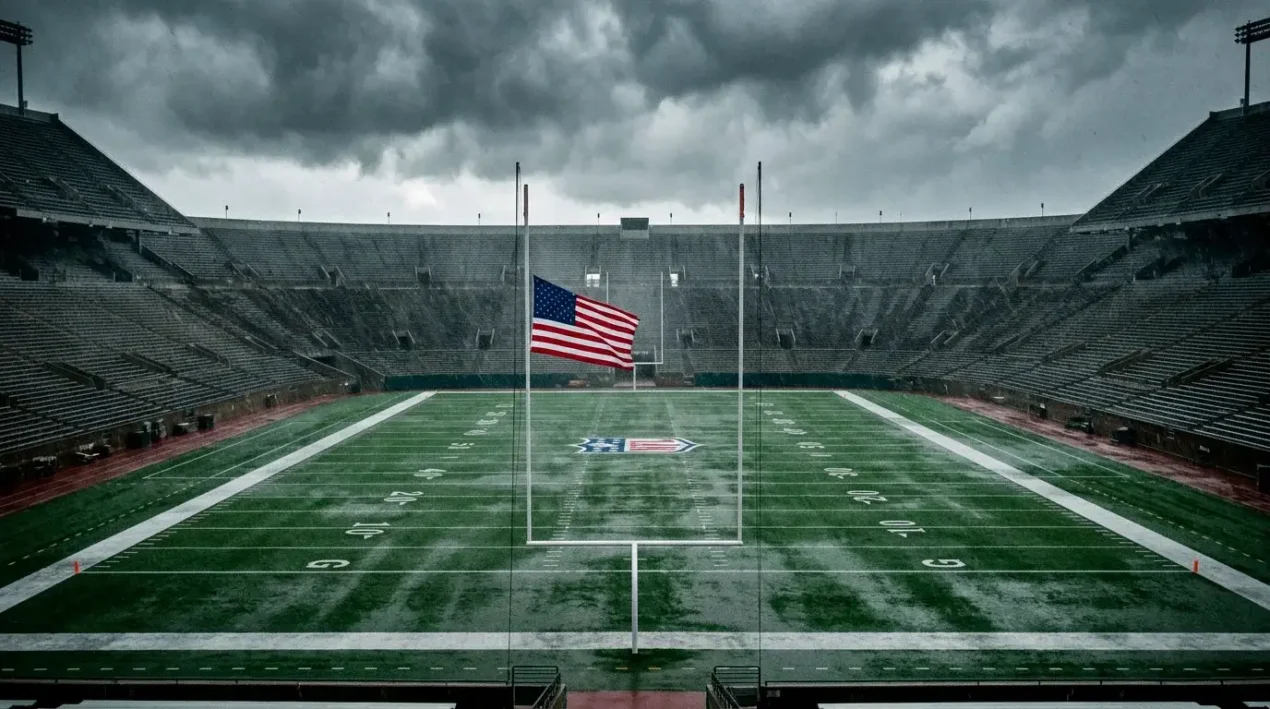
The Sunday I learned how much 18 mph of wind costs
A few years back I was confident on a passing-yards over for a starting QB in a late-season AFC East fixture. Strong receiver group, soft pass defence, total set at 47.5. I locked in the over at -110 on Saturday night. When I woke up Sunday, the forecast for the stadium had wind gusts climbing from 12 mph to 18 to 22 by kick-off. I did not change the bet. The QB threw for 187 yards. The over needed 274. The bet lost not because the projection was wrong on a calm-weather day, but because I had not adjusted for what wind actually does to a passing offence.
That mistake cost me a stake I still remember the size of. It also taught me the lesson that defines how I think about weather and NFL betting now. Weather is not a tiebreaker. Weather is a variable that, in the right conditions, dominates everything else on the card.
Wind speed: the variable that does the most work
Wind is the single weather factor that moves NFL prop and totals lines more than any other. Rain affects ball-handling. Cold affects kicker range. Wind affects the entire passing game, kicking game, and tactical decision-making by both head coaches. The threshold most analysts use is 15 mph sustained. Below 15 mph, the impact is modest. Above 15 mph, passing accuracy and deep-ball completion drop measurably. Above 20 mph, you start seeing offences abandon the deep passing game altogether and shift to a short, horizontal game plan.
The line implications are predictable. A game total that opened at 48.5 in calm-weather projections can drop to 45.5 or lower as wind forecasts firm up Saturday into Sunday. Passing-yard props on both QBs typically come down 15 to 25 yards in 20-plus mph conditions. Receiving-yards props on outside receivers come down further than those on slot receivers, because the deep routes that produce big games for X and Z receivers are the ones wind kills first.
The opportunity, if you are watching forecasts carefully, is the rushing side of the same script. When the passing game gets neutralised by wind, the rushing volume usually climbs. Lead RB rushing-yards overs become more attractive in wind-heavy spots, and the books sometimes lag the adjustment by a few yards. The same applies to the under on long-pass-completion props and on receiving-yards lines for downfield specialists.
Cold weather and the kicker market
Cold has a different mechanism. Below freezing, the football itself becomes harder to grip and kickers report measurably reduced range. A kicker who is comfortable from 53 yards in 50-degree weather is typically reliable only from about 47 in 20-degree weather. Beat-writer reporting on team practices, especially late-season weather practices, often confirms which kickers handle cold well and which lose distance.
The market response to cold-game forecasts shows up in two places. First, the team total totals adjust downward by 1 to 1.5 points relative to a neutral-weather projection. Second, the kicker make-percentage props (when offered) adjust to reflect the reduced reliability. The bigger value, in my view, is in the field goal props themselves. A team that gets to the 35-yard line in 20-degree weather is more likely to attempt a 52-yard field goal in calm conditions than a comparable team in calm-weather conditions, because the alternative – a fourth-down conversion attempt – is also harder in cold. That creates slightly elevated field goal attempt rates in cold games, which is the opposite of what most casual punters assume.
The 24-of-the-last-35-Super-Bowls statistic on 1-yard-line touchdowns becomes especially relevant in cold-weather games, because teams that get to the goal line in cold and wind are more likely to grind in a short rushing TD than risk a fade route or a slant in difficult passing conditions. Goal-line rushing TDs become a higher-probability play in adverse conditions, and the anytime-TD price on the team’s short-yardage back rarely adjusts as much as the conditions warrant.
Rain, snow and the ball-security problem
Rain and snow affect betting markets through a single dominant channel: fumbles. Wet ball is harder to grip on hand-offs, on receptions, on kick-returns, on punts. Teams in wet-weather games fumble more, recover fewer of their own fumbles, and turn the ball over at higher rates than the same teams in dry conditions. The downstream effect on betting markets is twofold. First, totals tighten as scoring expectations drop. Second, individual prop volatility increases – a player who fumbles a hand-off in the second quarter and gets benched for the next series can miss his line by 30 yards through no fault of his projected usage.
The interesting nuance is that snow affects passing more than rain does, contrary to what most punters think. Light to moderate rain has only a small impact on completion percentage and accuracy. Snow, especially heavy snow, blocks vision and trajectory on deep passes in a way that is harder to compensate for. Snow-game passing-yards unders are one of the more reliable weather-driven plays, especially on the road QB in a snow-affected stadium.
What I look for specifically: rain forecasts of 0.3 inches or more during game time, snow forecasts of any kind, and the combination of cold plus precipitation, which compounds the ball-security problem. The combination is the most punishing for passing offences and the most rewarding for defensive and rushing markets.
The forecast-to-line lag that creates opportunity
UK punters watching forecasts have a real edge against the market in the Saturday-night to Sunday-morning window. Forecasts firm up significantly in that period. Bookmakers monitor them, but they monitor a lot of things at once across many sports, and the speed of weather-driven line adjustments varies by operator. Some UK books reprice within an hour of a forecast update. Others lag by half a day or more.
The Pickswise prop ledger that ran to 59 winning props and +7.7 units across the regular season, wild card, divisional and conference rounds had a notable cluster of weather-driven calls in cold-weather road games – passing-unders, rushing-overs and team-total unders that the public market was slower to fully price. The pattern is consistent year over year. Weather information is hard to ignore once it is public, but it is also less efficiently priced than injury information because the bookmakers do not have a single confirmed event to react to. They have a probability distribution that keeps updating.
Henry Hodgson, the NFL UK GM, framed the broader UK engagement picture in a way that bears on weather betting: “There’s a lot of growth, and the UK is at the centre of that international growth as well.” That growth means more eyes on UK prop markets, which compresses general inefficiencies, but specific weather-related inefficiencies persist longer than other categories because they require a slightly more active forecast-watching habit than most casual punters maintain.
Stadium effects and the dome question
Domed stadiums and retractable-roof stadiums eliminate weather as a variable for the home team, which most UK punters understand. What is less appreciated is that the home team’s offensive style usually reflects the home environment. Teams that play their home games in domes typically build pass-first, pace-of-play offences that benefit from the controlled environment. When those teams travel to an outdoor stadium in adverse weather, the style mismatch is larger than the raw weather effect alone would suggest.
The implication for road-team prop betting in cold or windy weeks is that dome-based road teams have a meaningfully sharper drop-off than outdoor-based road teams in the same conditions. The QB who throws for 320 in his home dome is not a different player when he visits a windy outdoor stadium, but his game plan is built around a passing rhythm that does not translate, and his receivers’ route trees often do not adjust quickly. Road dome-team unders on passing yards and receiving yards in adverse outdoor conditions are a structurally repeatable bet.
The 2026 international slate brings nine games to non-US stadiums, including London games at Wembley and Tottenham Hotspur Stadium, Dublin’s Croke Park, Berlin, Madrid, Melbourne, Rio and Paris. Most of these are October fixtures with relatively mild weather, but London games in late October can deal with the same kind of wind and rain that affects English football. The Rams vs Jaguars game at Wembley in 2025 drew 86,152 fans in conditions that were notable enough to affect the kicking game; UK punters watching the international slate should treat London late-October fixtures with the same weather attention as a New England home game in November.
The practical checklist for weather-driven prop selection
My Sunday-morning weather check on every outdoor game starts with three numbers: wind speed (sustained), wind direction relative to the stadium, and precipitation type and intensity. Wind speed above 15 mph sustained is the threshold for adjusting passing markets. Wind direction matters because some stadiums funnel wind down the field axis (Soldier Field in Chicago is famous for this), magnifying the effect on passing accuracy. Precipitation above 0.3 inches or any snow shifts ball-security expectations.
The second check is temperature. Below 32 degrees Fahrenheit (0 Celsius), kicker range tightens. Below 20 degrees Fahrenheit (around -7 Celsius), passing accuracy drops measurably and gloves become a factor for receivers. The compounding factor of cold-plus-wind is more punishing than either alone, because it affects QB grip on the throw and receiver grip on the catch simultaneously.
The third check is the matchup-specific adjustment. A pass-first offence visiting a cold-and-windy stadium will see line movement on passing-yards. The bet is not always the obvious one. Sometimes the better play is the over on the opposing rushing market, because the script implication is that the visiting team will run more conservatively and the home team will lean on its ground game. Mapping the script before you map the props is the discipline that turns weather-watching from a heuristic into a consistent edge.
At what wind speed should I start adjusting my NFL passing prop bets?
The working threshold is 15 mph sustained wind during game time, with materially larger adjustments above 20 mph. Below 15 mph, the effect on completion percentage and yardage is modest enough that most prop lines have already absorbed it. Between 15 and 20 mph, deep-ball completion rates drop and the passing-yards line should price 10 to 15 yards lower than a calm-weather projection. Above 20 mph, the deep passing game gets effectively shut down, and unders on passing-yards plus overs on rushing-yards become structurally more attractive.
Do UK bookmakers always adjust NFL lines for weather forecasts?
They do, but at varying speeds. Most major UK operators monitor weather forecasts and adjust lines as conditions firm up through Saturday and Sunday morning. The speed of adjustment differs. Some books reprice within an hour of a forecast update, others within several hours. That lag is the window where UK punters watching forecasts carefully can pick off lines that have not yet reflected the new conditions, especially for outdoor November and December games in northern markets.
If weather thinking sharpens your interest in late-season UK prop spots, the related read is how primetime NFL games create their own betting dynamics for UK punters.
This material was created by the YardLedger team.
Related posts
Passing Yards Prop Strategy for NFL: Reading Lines, Pace and Defensive Context
NFL RB Committee Prop Strategy: How to Bet Backfields That Refuse to Anoint a Workhorse